
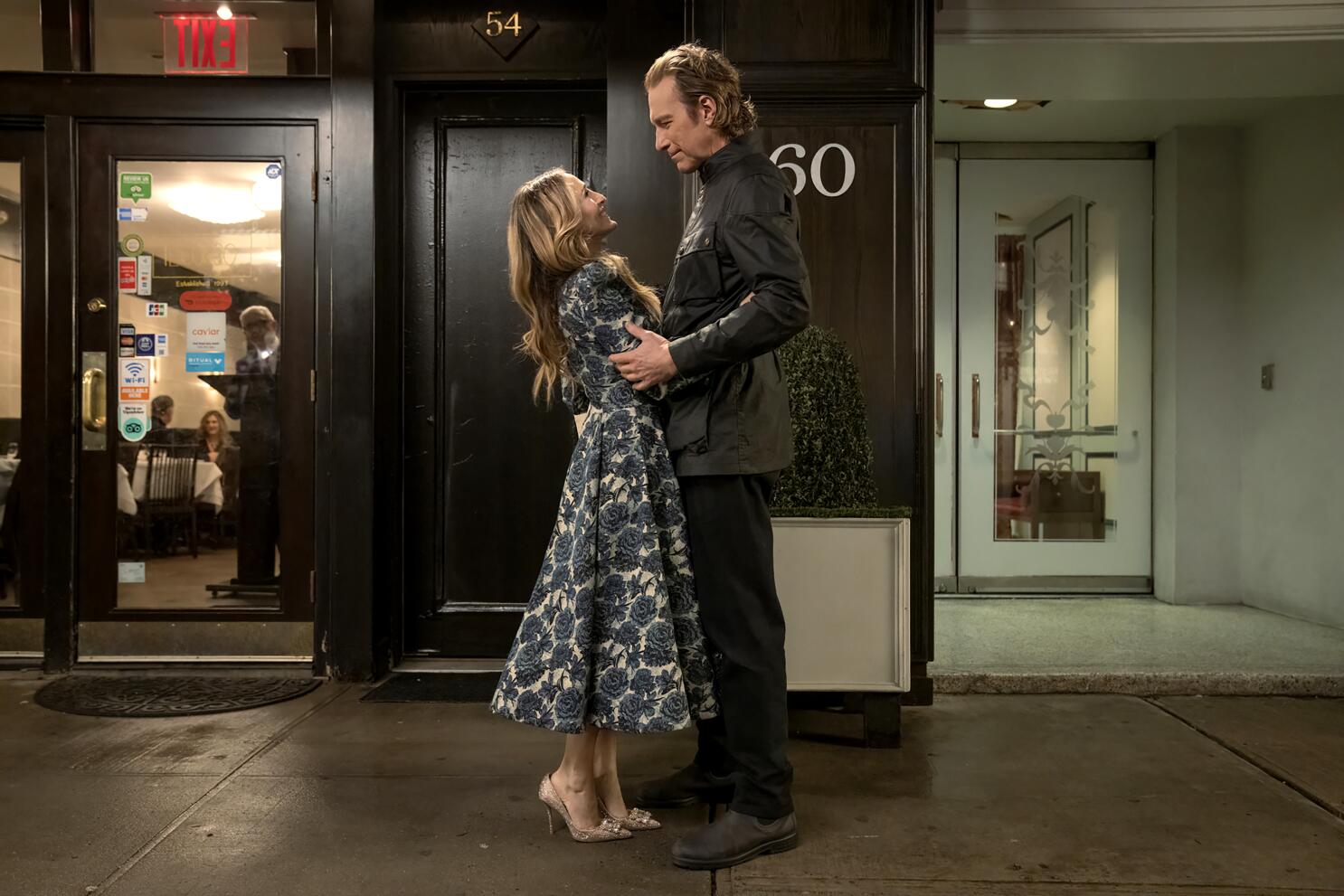
The eagerly awaited sequel to the cherished show “Sex and the City,” known as “And Just Like That,” launched with great excitement but ultimately left lots of viewers feeling disappointed. For a series that once encapsulated a generation’s views on relationships, companionship, and fashion, its follow-up struggled to recapture that same appeal. The new installment, which intended to portray the characters’ experiences in their 50s, instead seemed disconnected and distant from the core elements that made the original legendary. It starkly contrasted the clever, innovative, and sometimes gritty storytelling that fans had grown to love.
A crucial aspect influencing the show’s feedback was the absence of a key character, Samantha Jones. The real-life tensions between the actresses who played Samantha and Carrie Bradshaw led to an awkward and disappointing plot for their roles. Rather than providing a fitting farewell to such an essential character, the show reduced Samantha to off-screen texts and unclear references, which seemed like a disrespectful way of diminishing her role in the group’s chemistry. Her lack of presence left a clear gap, as Samantha embodied a significant contributor of humor, independence, and bold sexuality that was greatly missed in the latest season.
Moreover, the development of the remaining three characters, Carrie, Charlotte, and Miranda, seemed contrived and lacked authenticity. Carrie, who was the central figure of the original series, lost her characteristic introspection and distinct voice. While her grief storyline had the potential to provide emotional depth, it often seemed overly dramatic and missed the detailed exploration of her inner world that her columns used to offer. Charlotte, who was initially portrayed as a delightfully neurotic traditionalist, was placed in narratives that appeared trite and shallow, failing to move her past her identity as a devoted wife and mother. Her difficulties with parenting and social matters were depicted in a way that seemed more like a collection of contemporary challenges rather than true human experiences.
Miranda’s change was likely the most surprising for loyal followers. Her evolution from a skeptical and practical attorney to what seemed like an inexperienced and awkward learner seemed like a total departure from her well-known character. The series’ effort to depict her middle-aged realization appeared exaggerated, as her unexpected romantic relationship and venture into queerness felt more like a plot convenience than an authentic exploration. This dramatic alteration in character appeared to undermine her authenticity for the benefit of a “woke” storyline, distancing viewers who valued her for her honest, straightforward demeanor.
The new characters introduced to fill the void left by Samantha and to add diversity were, for the most part, poorly integrated into the story. They often felt like tokens rather than fully developed individuals with their own lives and motivations. The show’s attempt to address contemporary social issues, such as gender identity and racial inequality, came across as heavy-handed and preachy. The dialogue surrounding these topics lacked the natural, conversational flow of the original series and instead felt like a series of educational lectures. This approach robbed the show of its authenticity and replaced its sharp wit with a self-conscious desire to be politically correct.
Uno de los mayores inconvenientes fue el enfoque distintivo del programa hacia la moda. En “Sex and the City,” la moda era casi un personaje en su propio derecho, una prolongación de las personalidades de las mujeres y un reflejo de su estado emocional. En “And Just Like That,” la moda a menudo se percibía más como un disfraz, extravagante y distante de las vidas cotidianas de los personajes. Aunque hubo destellos de genialidad, gran parte del guardarropa parecía un intento desesperado por recuperar la vieja magia, resultando en atuendos que lucían más como piezas de museo que como ropa usada diariamente. Este enfoque superficial hacia el estilo reflejaba la falta general de profundidad del programa.
The tempo and composition of the newly released series also played a role in its failure. The storyline frequently shifted from one incomplete plot aspect to another, offering insufficient time for authentic character growth or emotional impact. The limited-format season felt confining, leading to hurried plotlines and unfulfilling conclusions. The initial series excelled through its episodic format, presenting complete narratives each week that gradually built into a larger story arc. In contrast, the new version resembled a disjointed assembly of snapshots rather than a unified tale, causing viewers to feel as if they were observing a summary of squandered prospects.
In the end, the downfall of “And Just Like That” can be linked to its failure to grasp what originally made “Sex and the City” so popular. The original series was a timely depiction of the experiences of single women residing in New York City, noted for its candidness, wit, and sincere depiction of friendships among women. In stark contrast, the new series appeared to be overly eager to adapt to modern trends and social discussions, lacking a strong basis in character development or storytelling. As a result, it failed to retain the genuine essence of its forerunner and consequently lost its viewers.
The show’s attempt to evolve the characters into their 50s missed the mark by failing to respect their established personalities. Instead of showing a natural progression, it forced them into situations and beliefs that felt completely out of character. This creative decision alienated the very fans who had grown up with these women and felt a personal connection to their journeys. The new series did not feel like a continuation of a story but rather a re-imagining of it, with key elements discarded in favor of a new, less compelling vision.
In the end, “And Just Like That” served as a disappointing reminder that some stories are best left untouched. While the nostalgia of seeing the characters return was a powerful draw, the show itself failed to deliver a narrative worthy of their legacy. It was a series that had the potential to explore the complexities of aging, loss, and change but instead opted for a superficial and uninspired approach. The result was a show that felt less like a celebration of friendship and more like a hollow imitation of a beloved classic.