

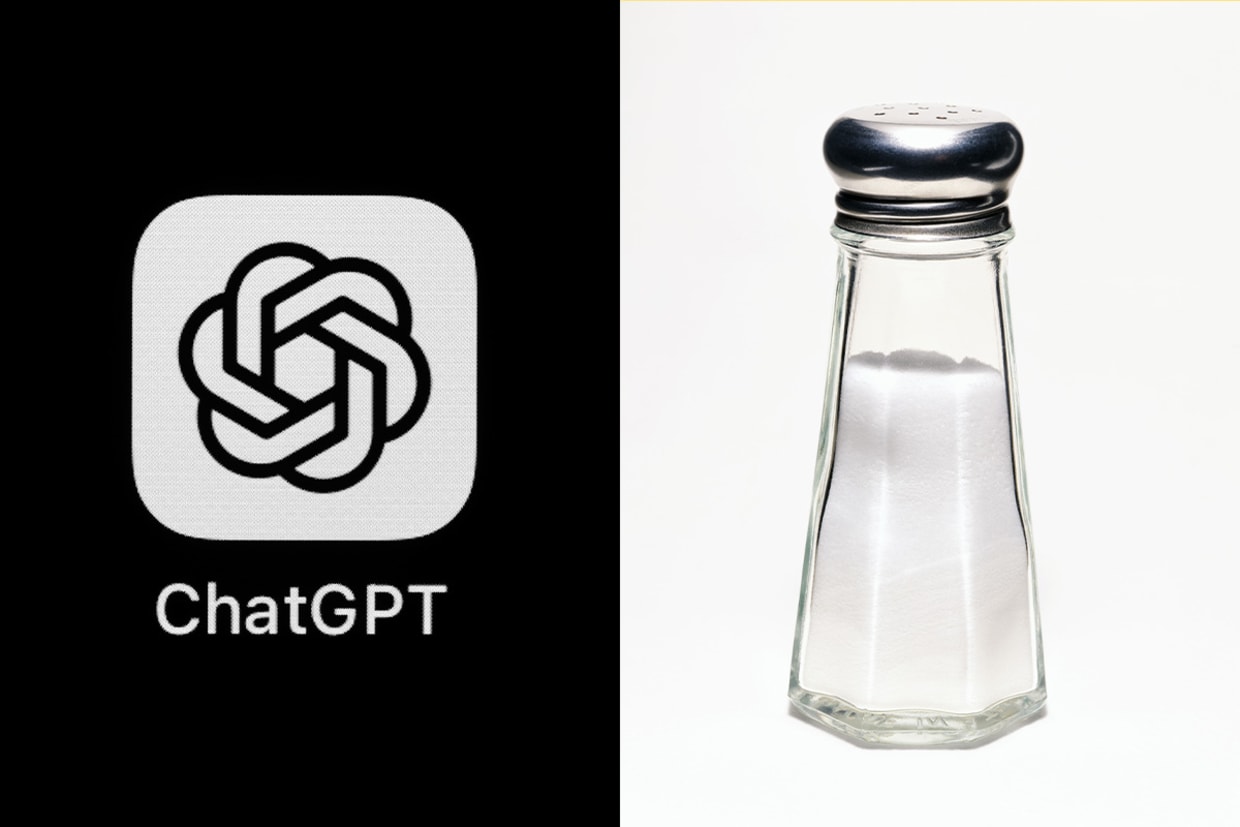
The tale of a person who ended up in the hospital experiencing hallucinations illustrates the dangers of depending on unverified online resources for medical advice. This individual sought a low-sodium meal plan from an artificial intelligence chatbot, ChatGPT, and subsequently faced serious health issues that specialists associate with the bot’s unverified guidance.
Este evento actúa como un recordatorio contundente y aleccionador de que, aunque la IA puede ser muy útil, carece de los conocimientos fundamentales, el contexto y las medidas de seguridad ética necesarias para ofrecer información sobre salud y bienestar. Su resultado es un reflejo de los datos con los que ha sido entrenada, no un reemplazo del conocimiento médico profesional.
The individual, who aimed to cut down on salt consumption, was provided by the chatbot with a comprehensive dietary plan. The AI’s guidance consisted of a collection of dishes and components that, although low in salt, severely lacked vital nutrients. The diet’s extreme restrictions caused the person’s sodium levels to decrease rapidly and dangerously, leading to a condition called hyponatremia. Such an electrolyte imbalance can have serious and immediate effects on the body, impacting areas ranging from cognitive abilities to heart health. The symptoms like confusion, disorientation, and hallucinations were directly caused by this imbalance in electrolytes, highlighting the seriousness of the AI’s erroneous recommendations.
The incident highlights a fundamental flaw in how many people are using generative AI. Unlike a search engine that provides a list of sources for a user to vet, a chatbot delivers a single, authoritative-sounding response. This format can mislead users into believing the information is verified and safe, even when it is not. The AI provides a confident answer without any disclaimers or warnings about the potential dangers, and without the ability to ask follow-up questions about the user’s specific health conditions or medical history. This lack of a critical feedback loop is a major vulnerability, particularly in sensitive areas like health and medicine.
Medical and AI specialists have responded swiftly to the issue, stressing that the problem lies not in the technology itself but in its improper use. They advise that AI should be viewed as an aid to expert guidance, rather than a substitute. The algorithms powering these chatbots are crafted to detect patterns in extensive datasets and produce likely text, yet they lack the ability to comprehend the intricate and interconnected workings of the human body. A human healthcare professional, in comparison, is educated to evaluate personal risk factors, take into account existing conditions, and offer a comprehensive, individualized treatment approach. The AI’s failure to execute this essential diagnostic and relational role is its most notable limitation.
The situation also brings up significant ethical and regulatory issues regarding the creation and use of AI in healthcare areas. Should these chatbots be mandated to display clear warnings about the unconfirmed status of their guidance? Should the firms that create them be responsible for the damage their technology inflicts? There is an increasing agreement that the “move fast and break things” approach from Silicon Valley is alarmingly inappropriate for the healthcare industry. This occurrence is expected to spark a deeper conversation about the necessity for stringent rules and regulations to oversee AI’s involvement in public health.
The attraction of employing AI for an effortless and swift fix is comprehensible. In situations where obtaining healthcare can be pricey and lengthy, receiving a prompt and cost-free response from a chatbot appears highly enticing. Nevertheless, this event acts as a significant cautionary example regarding the steep price of convenience. It demonstrates that concerning human health, taking shortcuts can produce disastrous outcomes. The guidance that resulted in a man’s hospitalization stemmed not from ill-will or purpose, but from a substantial and hazardous ignorance of the impact of its own suggestions.
As a result of this occurrence, discussions about AI’s role in society have evolved. The emphasis is now not only on its capacity for advancements and productivity but also on its intrinsic limitations and the risk of unforeseen negative impacts. The man’s health crisis serves as a vivid reminder that although AI can mimic intelligence, it lacks wisdom, empathy, and a profound grasp of human biology.
Until it does, its use should be restricted to non-critical applications, and its role in health care should remain in the domain of providing information, not making recommendations. The ultimate lesson is that in matters of health, the human element—the judgment, the experience, and the care of a professional—remains irreplaceable.