

Few figures in the history of technology have had an impact as far-reaching as Alan Turing. Renowned as one of the foundational pillars of computer science, Turing’s theories and innovations have shaped not only computational machinery but the very way society perceives information, logic, and artificial intelligence. Understanding Turing’s role in computer science entails tracing his distinct contributions to theoretical frameworks, practical accomplishments, and his enduring legacy across disciplines.
Theoretical Origins: The Turing Machine
The beginnings of the field of theoretical computer science are intimately connected to Turing’s 1936 publication, On Computable Numbers, with an Application to the Entscheidungsproblem. In this pioneering paper, Turing presented what is currently referred to as the Turing Machine. This conceptual machine offered a precise mathematical method to explain computation and laid down the foundation for identifying which problems were algorithmically solvable.
A Turing Machine, as envisaged by Turing, consists of a tape of infinite length, a read/write head that moves left or right, and a set of rules dictating its actions. This theoretical model is not a physical machine; rather, it lays the groundwork for analyzing the limits of computability. Unlike earlier forms of mechanistic logic, Turing’s approach formalized the process of calculation, enabling subsequent researchers to define and classify problems as computable or non-computable. The Turing Machine remains a central pedagogical and practical concept in computer science curricula worldwide.
The Boundaries of Logic and Computation
Turing’s exploration of computability addressed key philosophical questions, including the scope and limitations of human reasoning and machine calculation. He demonstrated that there exist well-defined problems that are undecidable; namely, problems for which no algorithm can provide a definitive solution in every case. One of the most famous results derived from the Turing Machine concept is the Halting Problem. Turing proved it is impossible for any general-purpose algorithm to determine, for all possible program-input pairs, whether the program will eventually halt or run indefinitely.
The implications of this revelation extend deeply into software engineering, cybersecurity, and mathematical logic. By delineating the boundaries of what can and cannot be computed, Turing set the stage for decades of research into complexity theory, algorithmic design, and the philosophical foundations of artificial intelligence.
Turing’s Practical Triumph: Cryptanalysis and the Birth of Modern Computing
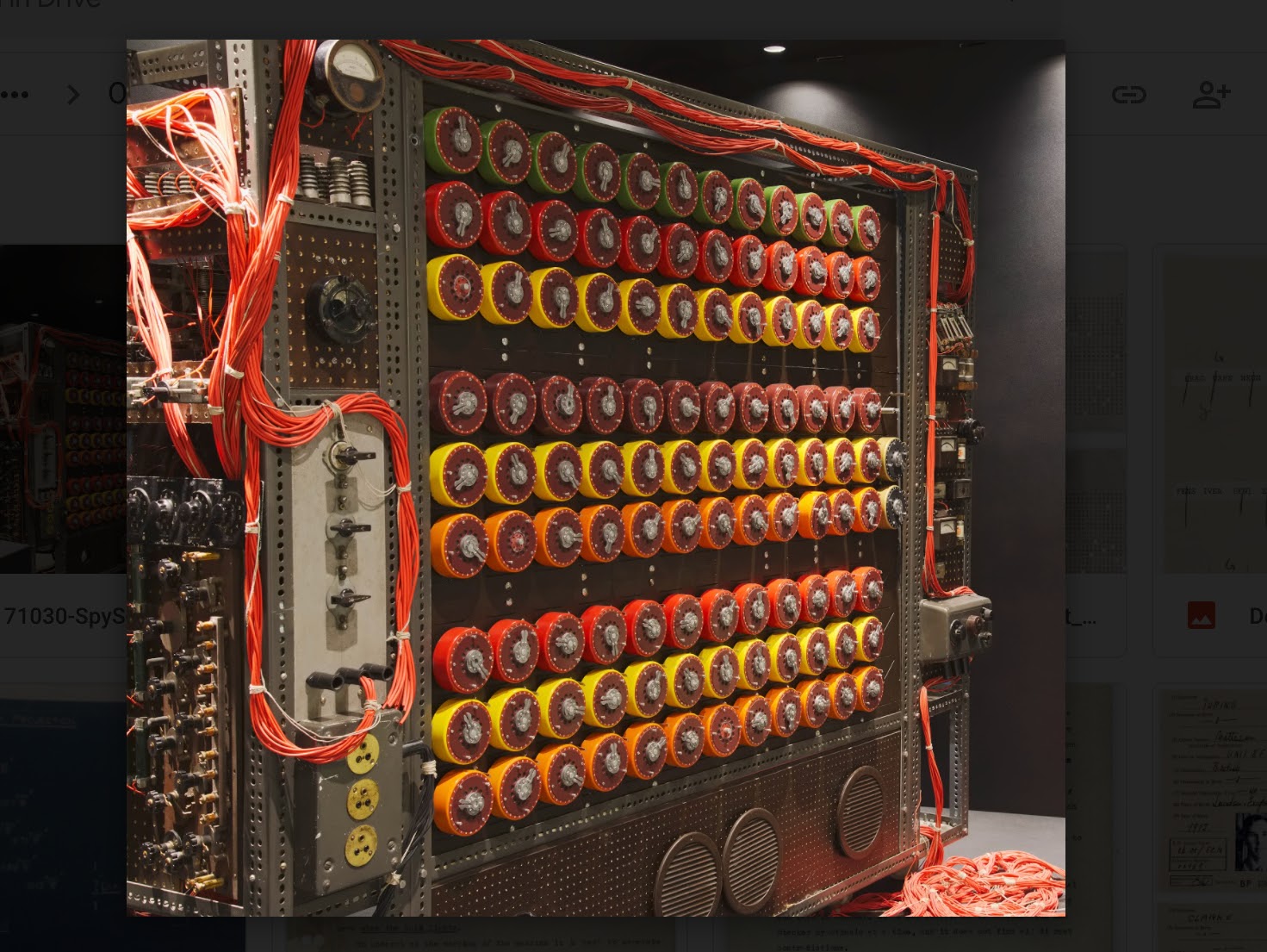
While Turing’s abstract theories were remarkable, his practical achievements during the Second World War arguably changed the course of history. As part of the British Government Code and Cypher School at Bletchley Park, Turing led efforts to decrypt messages encrypted by the German Enigma machine. Building upon Polish cryptologic work, he designed and oversaw the construction of the Bombe—an electromechanical device capable of automating the process of codebreaking.
This work did not merely yield military advantage; it showcased the essential principles of programmable machines under urgent, real-world constraints. The Bombe provided an early, tangible demonstration of automated logical reasoning and the manipulation of symbolic data—precursors to the operations of modern digital computers.
Turing’s codebreaking work underscored the importance and potential of computational devices. Beyond hardware innovation, his methodology illustrated how theoretical models could guide the engineering of machines with specific problem-solving objectives.
The Evolution of Artificial Intelligence
Alan Turing’s foresight extended past mechanical computation. In his 1950 publication, Computing Machinery and Intelligence, Turing explored the previously unconventional inquiry: Can machines think? To redefine this conversation, he suggested what is currently known as the Turing Test. In this examination, a human examiner engages in text-based conversation with both a person and a machine, trying to tell them apart. If the machine’s replies cannot be distinguished from those of the person, it is considered to have artificial intelligence.
The Turing Test remains a touchstone in debates about machine intelligence, consciousness, and the philosophy of mind. It shifted the conversation from abstract definitions to observable behaviors and measurable outcomes—a paradigm that informs the design of chatbots, virtual agents, and conversational AI today. Turing’s interdisciplinary approach melded mathematics, psychology, linguistics, and engineering, continuing to inspire contemporary researchers.
Historical Impact and Contemporary Significance
Alan Turing’s intellectual legacy is embedded in both the foundations and frontiers of computer science. The theoretical constructs he pioneered—such as Turing completeness—serve as benchmarks for programming languages and architectures. Notably, any computer capable of simulating a universal Turing Machine is considered capable of performing any conceivable computation, given adequate resources.
His contributions shaped the evolution of stored-program computers after the war. Innovators like John von Neumann embraced and modified Turing’s ideas to create architectures that serve as the foundation for contemporary computers. Additionally, Turing’s explorations into the concepts of intelligence and consciousness foreshadowed continuing discussions in cognitive science and neuroscience.
Examples of case studies are plentiful: ranging from established undecidability in software testing (highlighting the limits of some automated error identification) to the moral issues related to AI, which are derived directly from Turing’s pioneering models. The domains of computational biology, quantum computing, and cybersecurity frequently reference Turing’s principles as foundational concepts and initial frameworks.
A mind ahead of his time
Alan Turing’s contributions reflect a unique synthesis of theoretical depth, practical ingenuity, and visionary scope. He not only mapped the bounds of algorithmic logic but also translated these insights into transformative wartime technology and enduring philosophical challenges. Every algorithm, every secure communication, every step toward artificial cognition, echoes the foundational questions and constructs he formulated. The trajectory of computer science, from its origins to its current frontiers, continues to dialogue with the legacy of Alan Turing—a legacy woven into the logic of every computation and the aspiration of every innovation.