

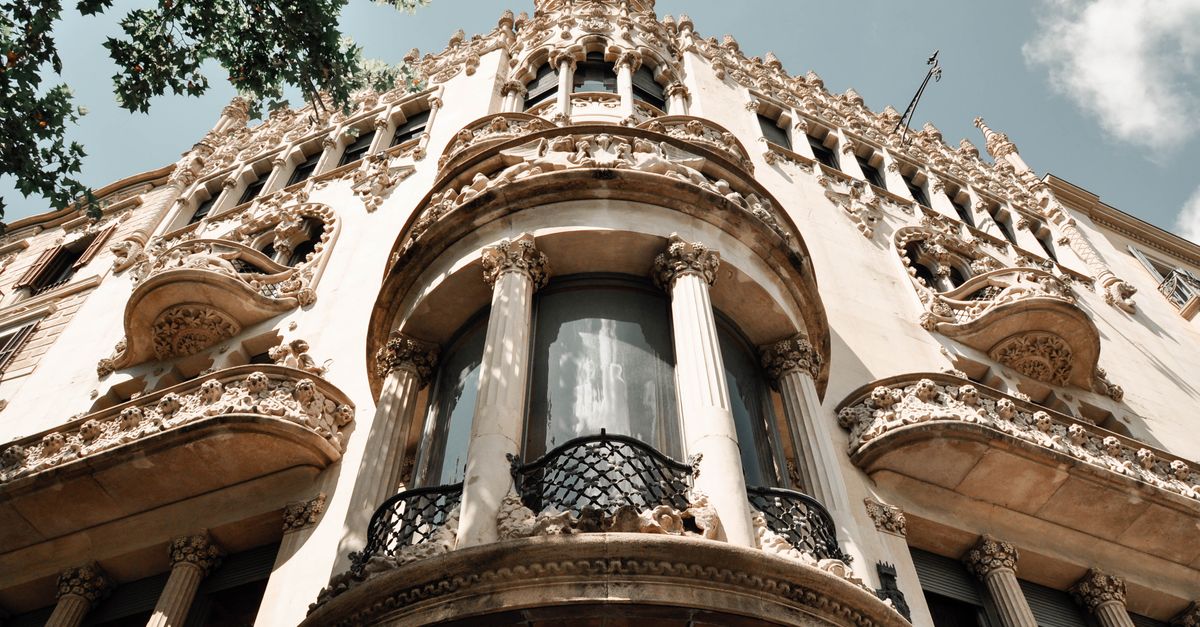
1. Gothic Architecture: The Vertical Ambition of Medieval Cities
Gothic architecture reshaped European urban identity between the 12th and 16th centuries. Characterized by pointed arches, ribbed vaults, and flying buttresses, it allowed cities to build taller, lighter, and more luminous structures than ever before. Cathedrals became civic symbols as much as religious centers.
Paris, with Notre-Dame Cathedral, illustrates how Gothic design defined skyline and street patterns. Similarly, Cologne grew around its monumental cathedral, which dominated construction for centuries. In Prague, the influence of Gothic architecture extended beyond religious buildings to bridges, town halls, and fortifications, giving the entire city a cohesive medieval character.
These towering edifices were far from mere artistic declarations; rather, they showcased financial power, technological advancement, and sacred dedication. The silhouette of the cathedral became fundamentally intertwined with urban identity.
2. Renaissance Architecture: Order and Proportion in Florence
Springing up in 15th-century Italy, Renaissance architecture brought classical Roman concepts of proportion, geometry, and symmetry back to life. Florence turned into the primary hub for this movement, driven in large part by key figures like Leon Battista Alberti and Filippo Brunelleschi.
The dome of Florence Cathedral revolutionized engineering, while palaces like Palazzo Medici established a template for urban residential architecture. Streetscapes were redefined through balanced façades, harmonious ratios, and restrained ornamentation.
This aesthetic swept across Europe, molding urban centers like Rome and Venice. Rational grids and grand public squares were prioritized by Renaissance planning, weaving classical principles into the cityscapes and shaping civic identity over generations.
3. Baroque Architecture: Drama and Power in Rome
Baroque architecture, flourishing in the 17th century, transformed cities into theatrical displays of power. It embraced movement, grandeur, and emotional intensity. Rome stands as the clearest example of a city shaped by Baroque vision.
Architects like Gian Lorenzo Bernini and Francesco Borromini reshaped plazas, churches, and fountains to generate dynamic spatial encounters. St. Peter’s Square, featuring its welcoming colonnades, demonstrates the ways architecture directed circulation and awareness.
Baroque planning extended to cities such as Vienna and Madrid, where palaces and grand avenues reinforced monarchical authority. Urban space became a stage for spectacle, ceremony, and political symbolism.
4. Neoclassical Architecture: Democratic Ideals in Washington, D.C.
Neoclassical architecture emerged in the eighteenth century as a revival of classical simplicity and order. Inspired by ancient Greece and Rome, it became closely associated with democratic governance and civic virtue.
Washington, D.C. exemplifies how a city can be defined by a single architectural ethos. The Capitol, the White House, and numerous federal buildings employ columns, pediments, and domes to project stability and authority. The city’s axial planning and monumental core reinforce the visual power of its institutions.
Similar influences shaped Paris during the Enlightenment and parts of Berlin, embedding rational planning and monumental symmetry into their urban character.
5. Victorian Architecture: Industrial Expansion in London
Victorian architecture reflects the rapid industrial growth of the 19th century. In London, it manifested in Gothic Revival landmarks like the Palace of Westminster, as well as in terraced housing that defined entire neighborhoods.
Technological breakthroughs like mass-produced brick and cast iron facilitated massive urban growth. Railway hubs such as St. Pancras merged engineering ingenuity with elaborate aesthetics, reflecting industrial self-assurance.
The Victorian style spread across the British Empire, influencing cities such as Melbourne and Toronto. Its eclecticism mirrored the diversity and ambition of industrial society.
6. Haussmannian Urbanism: The Reinvention of Paris
During the mid-1800s, Baron Georges-Eugène Haussmann engineered one of history’s most thorough urban transformations. Medieval Paris evolved into a modern metropolis defined by sweeping boulevards, cohesive façades, and integrated municipal infrastructure.
Haussmannian buildings share consistent cornice lines, wrought-iron balconies, and limestone façades. The new avenues improved sanitation, transportation, and military control, while also establishing a visually coherent cityscape.
This model influenced cities such as Buenos Aires and Brussels. The Parisian boulevard became synonymous with modern urban elegance and remains a defining global image.
7. Modernism: Functional Cities Like Brasília
Modernist architecture in the 20th century rejected ornament in favor of function, simplicity, and new materials such as reinforced concrete and steel. Brasília, inaugurated in 1960, represents the most ambitious attempt to build a city entirely on Modernist principles.
Designed by Lúcio Costa and Oscar Niemeyer, Brasília showcases monumental civic structures featuring sculptural shapes alongside vast open spaces. Residential superblocks embody rational planning principles paired with standardized living units.
Other cities, including parts of Berlin and Chicago, adopted Modernist ideals. The emphasis on efficiency and technological progress reshaped skylines worldwide.
- Open floor plans
- Glass curtain walls
- Minimal ornamentation
- Integration of structure and design
Modernism aimed to create universal architecture suited to industrial society.
8. Art Deco: Glamour in New York City
Art Deco emerged in the 1920s and 1930s, blending geometric forms, bold ornamentation, and modern materials. New York City became its most iconic showcase.
Skyscrapers such as the Chrysler Building and the Empire State Building combined vertical emphasis with decorative detailing. Zoning laws encouraged stepped forms, producing distinctive silhouettes.
Art Deco conveyed optimism during economic turbulence. Miami Beach also demonstrates how concentrated use of this style can define a city’s visual identity, attracting tourism and cultural recognition.
9. Colonial Architecture: Identity in Latin American Cities
Colonial architecture shaped cities across Latin America from the 16th century onward. Spanish planning principles established grid layouts centered on a main square, with administrative and religious buildings surrounding it.
Urban centers like Mexico City, Lima, and Cartagena preserve robust colonial districts defined by arcades, inner courtyards, and massive stone walls. A familiar cross-continental blueprint emerged from the replication of this city model.
The colonial grid influenced traffic flow, land distribution, and social hierarchy, embedding political order into spatial design.
10. Contemporary Sustainable Architecture: Eco-Cities Like Copenhagen
In the 21st century, sustainability has emerged as a defining architectural force. Copenhagen exemplifies how environmental priorities can shape an entire municipality.
Green roofs, bicycle infrastructure, and energy-efficient buildings reflect integrated planning. Projects such as waste-to-energy plants with recreational rooftops demonstrate multifunctional design. Strict energy standards and investment in renewable power have reduced carbon emissions significantly compared to late 20th-century levels.
Other municipalities, such as Singapore and Vancouver, incorporate vertical gardens, intelligent networks, and mixed-use areas to harmonize urban density with livability.
- Net-zero energy buildings
- Climate-responsive design
- Mixed-use density
- Integration of public transit
Eco-friendly practices are no longer merely an aesthetic preference, but rather a fundamental baseline for urban expansion.
The Lasting Imprint of Architectural Vision
Architectural styles do more than define buildings; they define how cities function, how citizens interact, and how societies express identity. From the spiritual ascent of Gothic cathedrals to the rational clarity of Renaissance palaces, from Baroque spectacle to Modernist efficiency, each movement translated cultural values into physical form.
Entire cities became living embodiments of these ideas. Streets, skylines, and public spaces reveal layers of ambition, belief, power, and innovation. As contemporary urban centers confront climate change, population growth, and technological transformation, architecture continues to serve as both mirror and catalyst. The cities that endure are those where design does not merely follow history but actively shapes it.