

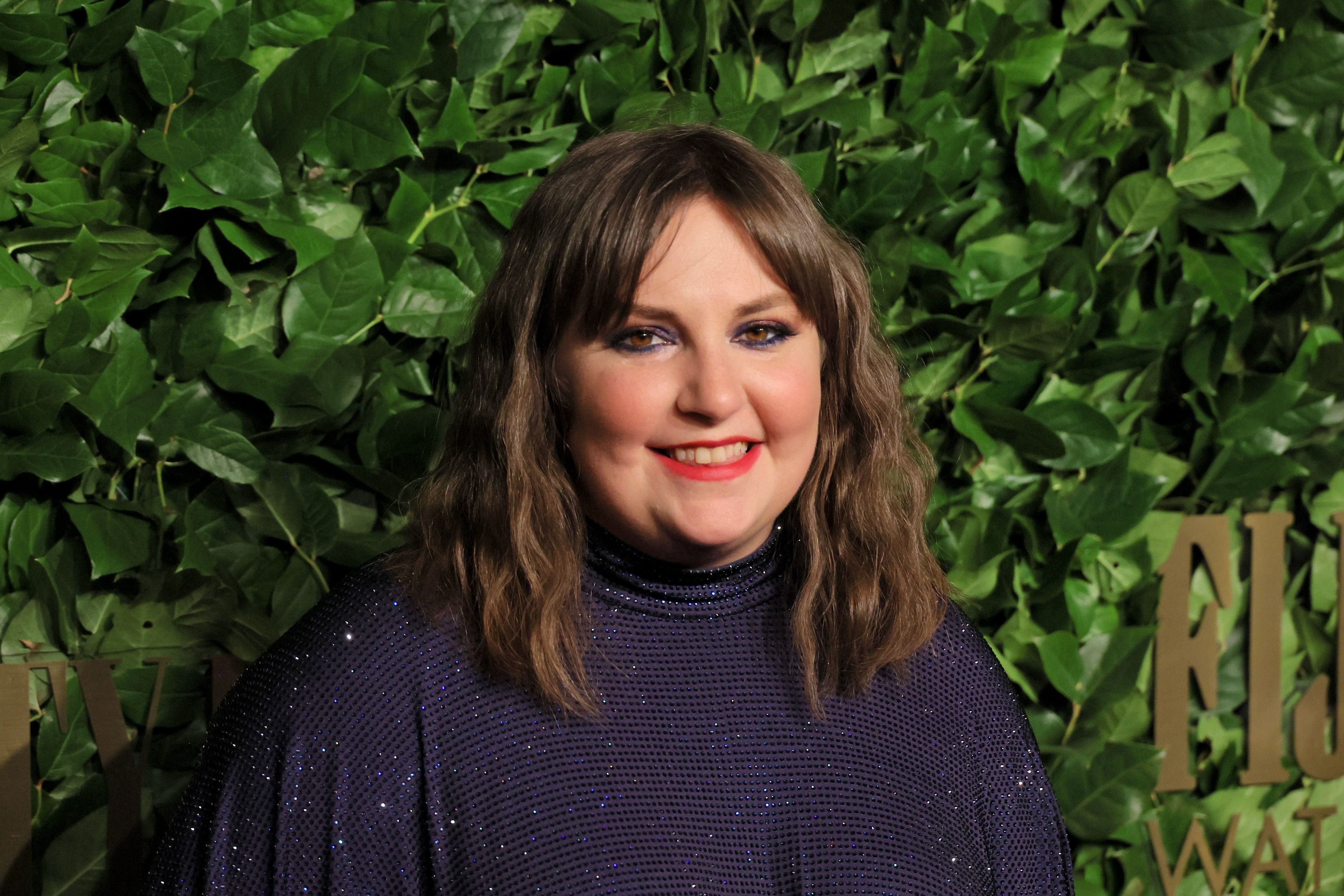
Lena Dunham has consistently been a prominent figure of both innovation and debate in the entertainment industry. Recognized for her honest storytelling and fearless approach to subjects typically deemed sensitive, the writer, director, and actor persistently defies norms—both in her professional sphere and in broader cultural discussions.
In her latest venture, Dunham turns her focus to London, where she has written and directed a romantic comedy that delves into the complexities of love, identity, and acceptance. Alongside this new creative chapter, she has been open about her ongoing experiences with fatphobia, self-worth, and the realities of dating in a world still dominated by unrealistic beauty standards.
Dunham, who rose to fame through her groundbreaking HBO series Girls, has built her career on telling stories that are unflinchingly honest, often drawing from her own life. With her newest film, she brings that same authenticity to the screen, exploring the vulnerability and humor that arise when people seek connection in the face of societal pressures.
In recent interviews, Dunham has spoken candidly about her decision to live in London, a city she now calls home. The British capital, she says, offered her a sense of freedom and anonymity that she had struggled to find in the United States. The pace of life, the diversity, and the relative lack of tabloid scrutiny provided the space she needed to heal, create, and grow.
Her move coincided with a deeper personal journey—one that involved re-evaluating how she saw herself, her relationships, and her body. For Dunham, navigating the entertainment industry as a woman who doesn’t conform to Hollywood’s traditional beauty ideals has been an uphill battle. Fatphobia, both overt and subtle, remains a pervasive force not only in media but in everyday interactions.
In speaking about fatphobia, Dunham highlights the insidious ways it shapes the way people are perceived and treated. She notes that while there has been progress in body positivity movements, the underlying biases still run deep. Social media, she argues, often perpetuates a curated version of self-love that doesn’t always reflect the realities of living in a body that doesn’t meet conventional standards.
Dunham’s candidness regarding her personal battles with self-image has connected with numerous individuals. Her readiness to display her physique in front of the camera—frequently in sensitive or humorous contexts—has generated both acclaim and disapproval. She consistently upholds her conviction that representation is significant: by showcasing bodies of diverse forms and dimensions in stories about affection, camaraderie, and individual development, she contests restrictive notions of attractiveness and appeal.
Her new film, set against the backdrop of London’s vibrant neighborhoods, continues this mission. The romantic comedy centers on characters who defy stereotypes, bringing humor and heart to stories that often go untold. Dunham has said that she was drawn to the idea of creating a rom-com where the protagonists don’t necessarily fit the glossy mold that the genre so often showcases.
Romantic comedies, in her opinion, possess the ability to influence how individuals perceive themselves and their connections with others. Frequently, these movies uphold the notion that only specific kinds of individuals—those who are young, slim, and conventionally attractive—deserve affection. By presenting an alternative viewpoint, Dunham aims to broaden the storyline and provide room for narratives that are more inclusive and genuine.
Apart from her on-screen pursuits, Dunham has been outspoken about the difficulties of dating outside the traditional standards of beauty society upholds. She considers the usual relationship advice given to women—most of which she believes to be outdated or based on damaging assumptions. The idea that a person needs to change to be lovable, or that their value is measured by romantic achievements, is something she aims to challenge through her creative work and public discussions.
Dunham’s own experiences with dating, chronicled both in her writing and interviews, paint a picture of someone who has navigated the highs and lows of relationships with humor and resilience. She speaks about the importance of self-compassion and the value of recognizing one’s inherent worth, regardless of societal messages that suggest otherwise.
Her advocacy extends beyond body image and dating. Dunham has long been involved in conversations around mental health, chronic illness, and feminism. She has been open about her struggles with endometriosis, a condition that not only impacted her physical health but also her emotional well-being and sense of identity. Her decision to undergo a hysterectomy in her early 30s was widely covered, and she used the experience to shed light on women’s health issues that are often overlooked or misunderstood.
By narrating her personal experiences, Dunham adds to a wider conversation concerning the overlap of well-being, self-governance, and personal identity. She highlights the significance of tuning into one’s own body, endorsing adequate healthcare, and confronting the prejudices related to both physical and mental wellness.
Her latest movie explores these topics in a nuanced yet important manner. It tells the tale of flawed individuals, genuine physiques, and the common longing for connection. Utilizing humor and vulnerability, the story encourages audiences to reflect on how love is formed not by physical flawlessness but through sincerity, compassion, and collective humanity.
The choice to set the story in London adds an additional layer of charm and diversity. Dunham has spoken about her affection for the city, describing it as a place where she felt she could reinvent herself without the burden of constant scrutiny. The cosmopolitan nature of London, with its rich tapestry of cultures and voices, serves as the perfect setting for a story that seeks to challenge conformity and celebrate individuality.
For Dunham, this film marks a return to the director’s chair after several years of focusing on writing and producing. The process, she says, has been deeply rewarding, offering her the chance to tell a story that feels both personal and universal. It also reflects her growth as an artist—one who is unafraid to evolve and tackle new creative challenges.
The reaction to her creations has consistently been varied, with Dunham herself admitting that not everyone resonates with her style. Nevertheless, her dedication to sincerity, despite any discomfort it may bring, remains central to how she tells her stories. Be it through TV shows, movies, or written pieces, she persists in creating room for tales that resist simple classification.
Looking ahead, Dunham shows no signs of slowing down. In addition to her film work, she remains active in literary and television projects. Her production company focuses on supporting diverse voices and stories that might otherwise struggle to find mainstream platforms. Through mentorship and collaboration, she seeks to uplift new generations of storytellers who bring fresh perspectives to the industry.
At its heart, Dunham’s creative journey is about more than just personal expression—it’s about challenging the frameworks that dictate who gets to be seen and heard. Her work underscores the importance of representation in all its forms, reminding audiences that stories about love, identity, and resilience belong to everyone.
As her new romantic comedy prepares to make its debut, Lena Dunham continues to navigate the intersection of personal experience and cultural commentary with the same boldness that has defined her career. Her voice, as polarizing as it may be, remains an essential part of the ongoing conversation about who we are, how we see ourselves, and the stories we choose to tell.