

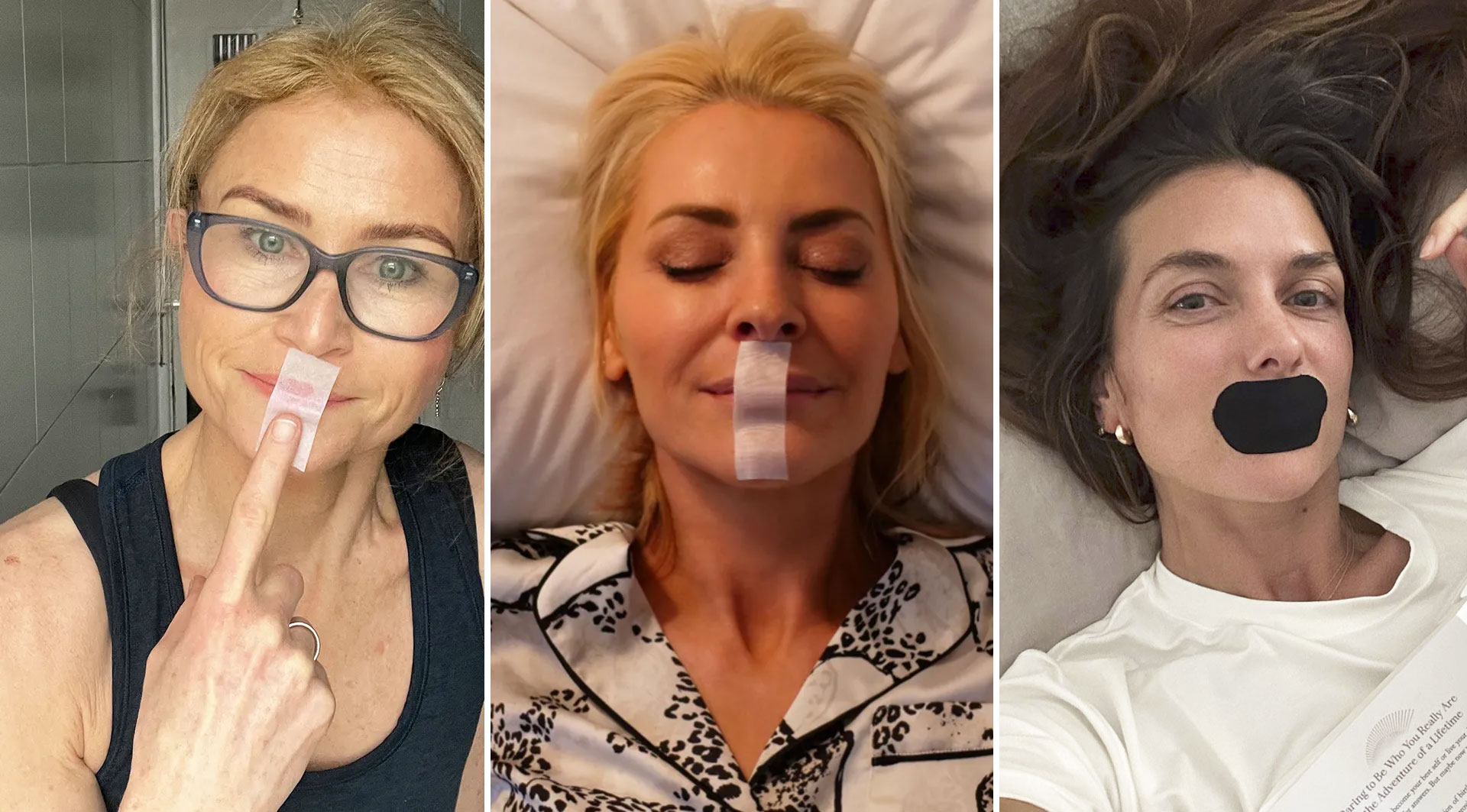
In the ongoing quest for better sleep and overall wellness, mouth taping has emerged as an unconventional yet increasingly popular practice. Promoted by some as a simple technique to improve breathing, enhance sleep quality, and reduce certain health risks, mouth taping involves placing a small piece of medical tape over the lips during sleep to encourage nasal breathing. While the idea has attracted attention on social media, in wellness circles, and even among some healthcare professionals, it is important to take a closer look at both the potential benefits and the possible downsides of this practice.
Mouth taping centers on the belief that nasal breathing, rather than breathing through the mouth, offers numerous physiological advantages. Proponents argue that breathing through the nose during sleep can improve oxygen exchange, filter airborne particles more effectively, and maintain optimal moisture in the airways. Conversely, chronic mouth breathing has been associated with problems such as dry mouth, snoring, sleep disturbances, and even dental issues. As such, advocates of mouth taping suggest that this simple intervention can help retrain the body to breathe correctly, particularly during the night when people are less conscious of their breathing habits.
One well-known advantage of sealing the mouth with tape is its possible ability to lessen snoring. Snoring often arises due to vibrations in the upper airway when airflow is blocked. Breathing through the mouth, particularly when the mouth opens during sleep, can worsen this problem. By softly urging the lips to stay shut, taping the mouth might aid in encouraging quieter, nasal breathing, which some people say decreases the intensity and occurrence of snoring. This, in turn, can lead to more peaceful sleep for both the person and their sleeping partner.
Another suggested benefit is the enhancement of sleep quality. Breathing through the nose is thought to improve oxygen intake and stabilize breathing rhythms, which can lead to deeper and more rejuvenating sleep phases. Individuals who engage in mouth taping frequently mention feeling more refreshed and attentive upon waking, implying that the practice might assist in reducing morning sluggishness and disturbed sleep.
Furthermore, inhaling through the nasal passages aids in moistening and purifying the air, providing protection from environmental pollutants, allergens, and harmful microorganisms. The nose inherently warms and adds moisture to the air prior to its arrival in the lungs, potentially minimizing airway inflammation and decreasing the likelihood of respiratory illnesses. It is also believed by some that breathing through the nose can assist in preserving a steadier level of carbon dioxide in the bloodstream, which may benefit both heart and nerve system operations.
Despite these reported benefits, mouth taping is not without its critics and potential risks. One major concern is that mouth taping could be dangerous for individuals who have underlying respiratory conditions, such as obstructive sleep apnea (OSA), asthma, or chronic nasal congestion. In these cases, restricting mouth breathing without addressing the root cause of airway obstruction could exacerbate breathing difficulties during sleep and lead to potentially serious health risks.
Obstructive sleep apnea, in particular, is a condition that involves repeated pauses in breathing during sleep due to upper airway obstruction. For individuals with undiagnosed or untreated OSA, mouth taping could worsen airflow restriction, resulting in lower oxygen levels and disturbed sleep. It is therefore crucial for anyone considering mouth taping to consult with a healthcare provider first, especially if they experience symptoms such as loud snoring, choking or gasping during sleep, or excessive daytime sleepiness.
Another limitation of mouth taping is that not everyone may find it comfortable or suitable for nightly use. Some individuals may experience skin irritation from the adhesive, while others may feel claustrophobic or anxious about restricting mouth movement during sleep. For those with nasal congestion from allergies, sinus issues, or structural problems such as a deviated septum, mouth taping may simply not be practical or advisable without first addressing the nasal obstruction.
Moreover, the scientific evidence supporting mouth taping remains limited. While anecdotal reports and small studies suggest potential benefits, large-scale clinical research is still lacking. This means that while some people may experience positive outcomes, the practice may not be universally effective or appropriate. Medical professionals emphasize that more research is needed to better understand the mechanisms, benefits, and potential risks of mouth taping before it can be widely recommended.
For individuals interested in exploring mouth taping as a means to improve sleep, it is advisable to proceed cautiously and take certain precautions. First, consulting with a sleep specialist or healthcare provider can help rule out underlying sleep disorders or respiratory issues. A professional assessment can also provide alternative recommendations, such as positional therapy, nasal breathing exercises, or the use of continuous positive airway pressure (CPAP) therapy for those diagnosed with sleep apnea.
If approved to attempt mouth taping, people should choose skin-friendly, hypoallergenic tapes crafted for medical or sleep-related purposes. These tapes are soft on the skin and can be simply taken off if required. Certain products available in the market are made to be breathable and provide emergency airflow if nasal passages become obstructed, easing worries about safety while sleeping.
It is also important to ensure that the nasal passages are clear before using mouth tape. Saline sprays, nasal strips, or humidifiers can help reduce nasal congestion and make nasal breathing more comfortable. For some people, practicing nasal breathing exercises during the day can help transition to more consistent nasal breathing at night without the need for physical prompts such as tape.
Lifestyle changes may also complement or even replace the need for mouth taping. Weight management, reducing alcohol consumption, avoiding heavy meals before bedtime, and establishing a consistent sleep routine are all proven strategies for improving sleep quality and reducing snoring. Additionally, breathing techniques inspired by practices such as yoga or the Buteyko method can help individuals become more aware of their breathing patterns and may encourage nasal breathing naturally.
In summary, mouth taping is an emerging practice that has gained attention as a potential tool for improving sleep by encouraging nasal breathing. While some individuals report benefits such as reduced snoring, better sleep quality, and improved morning alertness, the technique is not without risks, especially for those with underlying respiratory or sleep conditions. The lack of extensive scientific research means that the practice should be approached with care, and ideally under the guidance of a healthcare professional.
As more people become interested in natural, non-drug methods for improving sleep health, sealing the mouth with tape might be a straightforward and affordable choice for some individuals aiming to boost their sleep quality. Nevertheless, it is improbable to be a universal remedy, and it’s essential to thoughtfully assess one’s health, comfort, and safety.
For anyone interested in the concept of mouth taping, the main point is to stay knowledgeable, careful, and receptive to different methods that promote healthy breathing and restful sleep. Similar to any wellness practice, solutions that suit one individual may not be effective for someone else, and the most successful results usually come from a mix of personalized strategies that take into account personal needs and ways of living.