

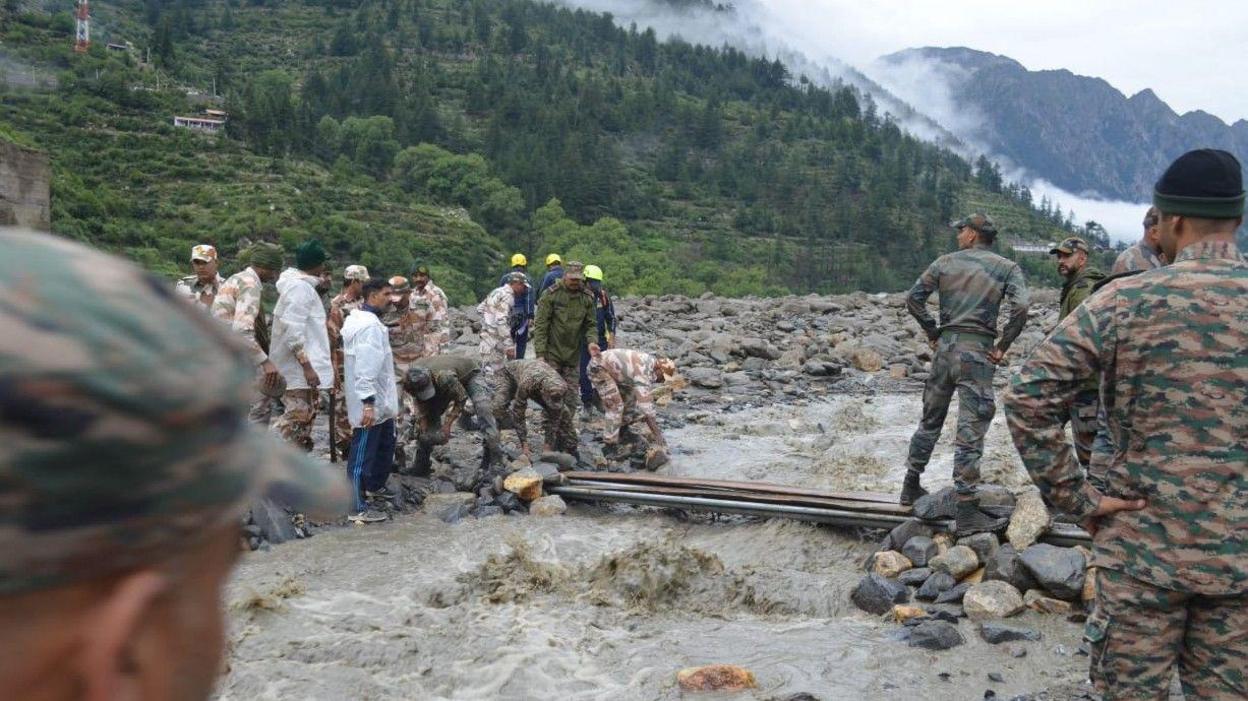
A catastrophic sequence of sudden floods has resulted in over a hundred people being unaccounted for in numerous northern Indian regions, with rescue efforts ongoing despite difficult circumstances. Heavy rainfall caused unexpected torrents of water to rush through hilly areas, leaving locals and tourists off guard. The most severely impacted locations consist of segments of Himachal Pradesh and Uttarakhand, where overflowing rivers dismantled roads, bridges, and structures along their course.
Local authorities report that the missing persons include villagers, construction workers, and pilgrims visiting sacred sites in the Himalayan foothills. Search teams comprising national disaster response personnel, military units, and local volunteers are combing through debris and flooded areas, though persistent rainfall and damaged infrastructure are hampering efforts. Helicopters have been deployed to reach cut-off communities where roads have been completely washed away.
Weather experts link the severe weather condition to particularly intense monsoon rainfalls that occurred over a brief timespan. Certain regions experienced their usual monthly rainfall within only a day, overwhelming the mountainous landscape’s ability to soak up water. Climate specialists observe that these highly intense rainfall occurrences are becoming more common in the area, aligning with global warming forecasts regarding monsoon trends in South Asia.
The floods struck with terrifying speed during early morning hours, giving residents little warning. Survivors describe being awakened by roaring sounds moments before walls of water crashed through their communities. Many had only minutes to flee to higher ground, leaving all possessions behind. Several eyewitnesses reported seeing vehicles and entire structures being carried away by the raging currents.
Emergency shelters have been established in schools and government buildings across affected districts, housing thousands of displaced residents. Relief organizations are distributing food packets, clean water, and medical supplies, while doctors warn of potential disease outbreaks from contaminated water sources. The Indian Red Cross has mobilized teams specializing in disaster response to assist local health services.
State authorities have unveiled aid plans for families of those who passed away and for individuals who lost their residences or means of living. Nonetheless, a number of impacted citizens voice dissatisfaction with the speed of assistance delivery and what they portray as insufficient readiness for foreseeable monsoon dangers. Certain neighborhoods indicate that unauthorized building by riverbanks and tree removal could have intensified the effects of the flooding.
El accidente ha reavivado las discusiones sobre las prácticas de desarrollo en regiones montañosas ecológicamente sensibles. Los activistas ambientales señalan numerosos proyectos hidroeléctricos y expansiones de carreteras que, según ellos, han alterado los patrones de drenaje natural y aumentado la susceptibilidad a condiciones climáticas extremas. Los funcionarios del gobierno reconocen la necesidad de una mejor planificación del uso del suelo, pero destacan los desafíos de equilibrar las necesidades de desarrollo con la protección ambiental.
Tourism, a key economic sector for the area, has been heavily affected during what is typically the busiest time of the year. Countless travelers were removed from renowned hill stations, while others are still stuck in isolated locations. The hospitality sector is dealing with substantial financial losses due to cancellations and damage to properties, which intensifies the economic impact on local populations.
While search efforts go on, families of the missing keep watch at relief centers, yearning for any updates on their loved ones. Rescue teams warn that with each day that goes by, the likelihood of discovering survivors lessens, yet they refer to previous miracles where individuals were discovered alive after being trapped for long durations in comparable catastrophes.
The Indian Meteorological Department has released warnings about more intense rains expected in the following days, heightening fears of further floods and landslides. Authorities responsible for managing disasters are advising people living in at-risk areas to move to safer places until the storm subsides.
This tragedy marks the latest in a series of extreme weather events to hit South Asia this monsoon season, following deadly floods in neighboring countries. Climate experts warn that the region’s combination of dense population, fragile ecosystems, and increasing weather volatility creates perfect conditions for recurring disasters of this nature.
Las inundaciones han interrumpido cadenas logísticas esenciales, con importantes carreteras bloqueadas por deslizamientos de tierra y tramos arrasados. Esto está impactando el transporte de bienes esenciales hacia regiones montañosas que ya enfrentan escasez. Las autoridades están trabajando para establecer rutas temporales mientras los ingenieros evalúan las reparaciones extensivas necesarias para la infraestructura permanente.
In distant villages, community networks have turned into vital support systems as residents unite to exchange resources and knowledge. These community-driven initiatives are enhancing official relief activities, especially in regions not yet accessed by government responders. Local volunteers are utilizing social media to organize resources and locate those in immediate need of help.
The catastrophe has led to demands for better early alert systems and evacuation procedures in regions susceptible to flooding. Although India has significantly invested in meteorological prediction technology, there are still shortcomings in transmitting warnings to isolated communities and guaranteeing prompt actions at the local scale. It has been reported that some villages were informed about impending floods but did not have precise guidance on what protective measures to take.
As the immediate crisis response continues, longer-term questions emerge about adapting to the region’s changing climate reality. Urban planners and disaster experts advocate for flood-resistant construction standards, restored natural buffers along waterways, and community-based preparedness programs. These measures could reduce vulnerability to what many fear will be increasingly common events in coming years.
International aid organizations have offered assistance, though Indian authorities indicate that domestic resources are currently sufficient to manage the crisis. The government has emphasized its commitment to supporting affected communities through the difficult recovery period ahead, while also working to strengthen resilience against future climate shocks.
For now, the focus remains on locating the missing, providing relief to survivors, and preventing further casualties as the monsoon continues its seasonal progression across the subcontinent. The disaster serves as a sobering reminder of nature’s destructive power and the urgent need for climate adaptation strategies in vulnerable regions worldwide.