

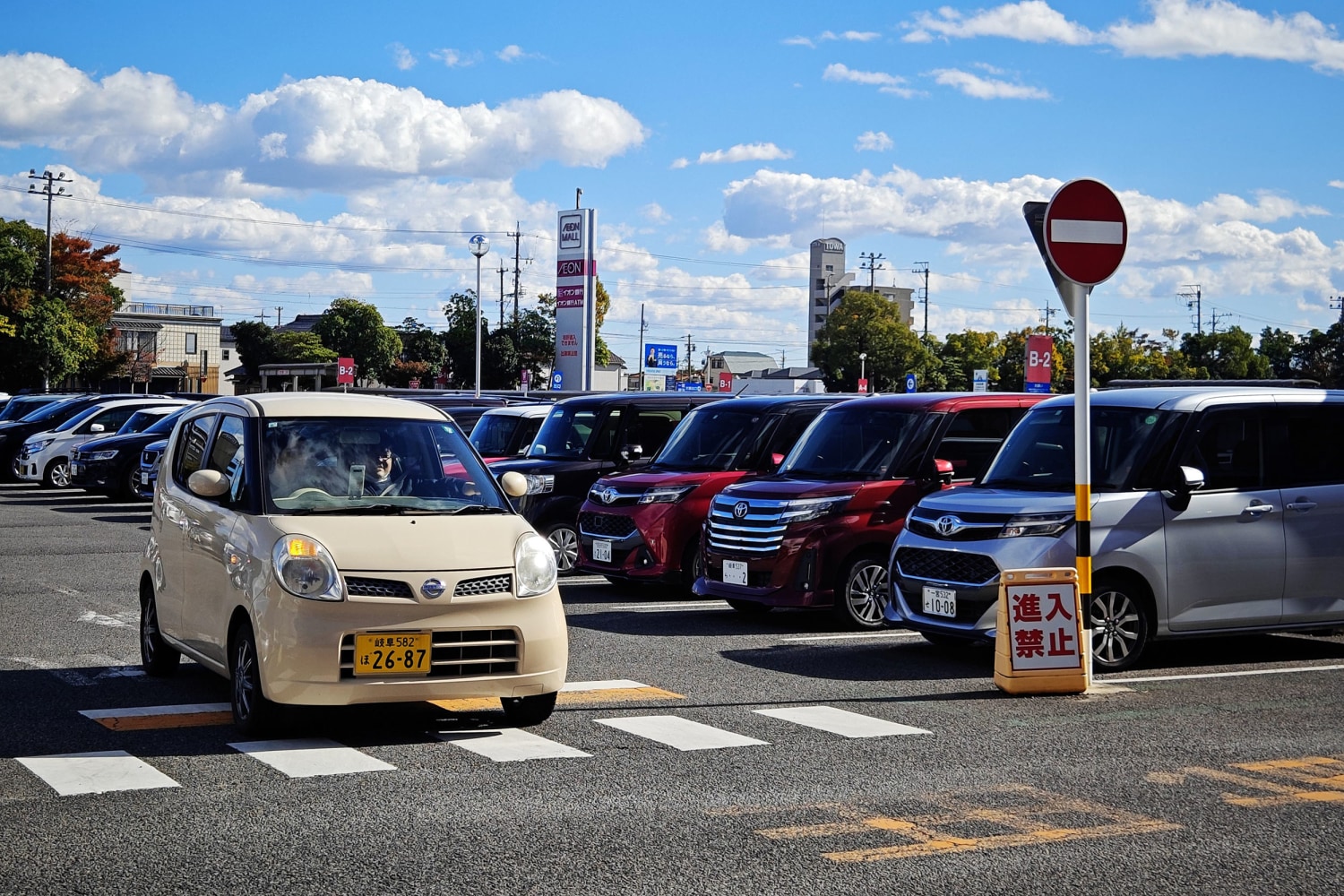
A rising demand for small, budget-friendly vehicles is steadily reshaping long-held beliefs about how much size and power drivers actually need on U.S. roads, turning what once seemed like a minor trend into a wider discussion about convenience, affordability and the evolving direction of daily transportation.
How miniature trucks have ignited a broad conversation about the future of driving in the United States
For David McChristian, a firefighter living in Houston, the appeal of a small, utilitarian vehicle is straightforward. He needs a truck that can handle everyday tasks: carrying groceries, transporting a mattress from a store, and reliably getting him to work. What he does not need, he argues, is a massive pickup designed to haul several tons or dominate highway lanes. His perspective challenges a deeply rooted American norm, where larger vehicles are often equated with utility, safety and status, even when most drivers rarely use their full capabilities.
This perspective has led McChristian and a rising wave of drivers to focus on a vehicle segment long embraced in Japan yet still relatively unknown to many Americans: kei cars and kei trucks. Small, lightweight and modest in output, these vehicles embody a markedly different approach to mobility, emphasizing efficiency, affordability and appropriately scaled design rather than sheer size.
Understanding kei cars and the reasons behind their existence
Kei vehicles take their name from the Japanese term “kei-jidōsha,” which translates roughly to “light automobile.” The category was created in Japan in the aftermath of World War II, at a time when the country needed to stimulate its domestic auto industry while making personal transportation accessible to a population rebuilding from devastation. The government established strict limits on size, engine displacement and power output, and in return offered incentives such as reduced taxes, lower insurance costs and easier parking requirements.
Over the decades, kei cars and trucks have become a defining feature of daily life in Japan, particularly outside major metropolitan centers. They are not tied to a single brand; instead, they are produced by several manufacturers, including Honda, Suzuki and Daihatsu. While early versions were basic and utilitarian, modern kei vehicles now include a wide range of configurations, from boxy micro-vans to small pickup trucks and even electric models designed for urban use.
Typically, a kei truck costs around $10,000 in Japan, making it dramatically cheaper than most new vehicles in the United States. Its engine produces roughly 60 horsepower, a fraction of what powers full-size American pickups, yet enough for short trips, local deliveries and daily errands. In a country with narrow roads, limited parking space and dense neighborhoods, this design is not a compromise but an advantage.
The divergence from American automotive culture
The allure of kei vehicles becomes even more evident when set against dominant trends in the U.S. auto market, where cars and trucks have grown steadily larger, heavier, and more powerful over recent decades, and where pickup models such as the Ford F-150—often boasting engines with more than 300 horsepower and the capacity to tow several thousand pounds—top sales charts despite many owners seldom hauling substantial loads or leaving paved roads.
This growth has been driven by a combination of consumer preferences, safety regulations and fuel economy rules that inadvertently favor larger vehicles. Comfort on long highway trips, a sense of protection afforded by size, and cultural associations with ruggedness and independence all play a role. As prices have climbed, so too has the perception that a bigger vehicle offers better value, even if its full capabilities remain unused.
Kei vehicles directly upend this logic, posing a straightforward question: what if most motorists opted for a vehicle built around their real, everyday use instead of imagined extremes? For advocates such as McChristian, the solution is a renewed focus on practicality. He notes that even after covering the cost of shipping his imported kei truck to the United States, he spent far less than he would have on a used domestic pickup, all while gaining the reliability and functionality that match his needs.
Rising curiosity and notable public focus
Interest in kei vehicles has slowly grown in the United States, fueled by online communities, specialty importers and advocates who see them as a solution to rising vehicle costs. Japanese export data shows a steady increase in kei vehicles being shipped abroad, with American buyers drawn by low maintenance expenses and mechanical simplicity.
This niche interest received a significant boost when former President Donald Trump publicly praised the vehicles after seeing them during a visit to Japan. Describing them as small, appealing and efficient, he openly wondered how such cars might fare in the American market. Shortly afterward, he claimed to have approved the idea of producing “tiny cars” domestically, emphasizing their affordability, fuel efficiency and safety.
While the remarks sparked headlines, they also prompted concrete questions. Trump’s statements seemed less concerned with bringing in Japanese kei vehicles and more focused on producing comparable compact cars within the United States. That difference is significant, since importing existing kei models and building new ones that comply with U.S. standards entail completely separate legal, economic, and regulatory hurdles.
Safety standards and regulatory barriers
One of the most significant obstacles facing kei vehicles in the United States is compliance with federal safety regulations. Many kei cars, especially older models, lack features that are standard or mandatory in the U.S., such as airbags, advanced crash structures and modern electronic safety systems. As a result, importing them is generally restricted to vehicles that are at least 25 years old, qualifying for an exemption from current safety standards.
Even so, the legality of operating kei vehicles differs significantly from one state to another, with some permitting them on public roads under relatively light rules, others restricting them to designated low-speed zones, and still others prohibiting them outright, creating a fragmented regulatory landscape that leaves owners uncertain and makes broader adoption more challenging.
Advocacy groups like Lone Star Kei, led by McChristian, have worked to change local regulations, arguing that these vehicles can coexist safely with larger cars when used appropriately. Still, experts caution that safety concerns are not trivial. Driving a small, lightly built vehicle at highway speeds alongside large SUVs and pickups poses real risks, particularly for families or long-distance travel.
Manufacturing challenges and economic realities
Even if regulatory hurdles were eased, creating kei-style vehicles in the United States would still present major challenges, as automotive production demands substantial capital and developing a brand‑new platform that satisfies U.S. safety and emissions requirements carries a high price, while adapting an existing model often proves even more expensive.
Economists point out that the American market has historically struggled to support small, low-margin cars. Many compact models have been discontinued in recent years due to declining sales, as consumers gravitate toward crossovers and trucks. From a manufacturer’s perspective, the profit potential of a $10,000 vehicle is limited, especially once higher labor costs, regulatory compliance and domestic supply chains are factored in.
As a result, any kei-inspired vehicle built in the U.S. would likely cost significantly more than its Japanese counterpart. That price increase could undermine one of the category’s main selling points: affordability. While some barriers could theoretically be addressed through legislation or updated safety rules, experts remain skeptical that such changes would happen quickly or comprehensively.
Situations in which compact vehicles might be practical
Despite these challenges, there are specific contexts in which kei-style vehicles could find a foothold in the United States. Dense urban areas, where parking is scarce and trips are short, are often cited as ideal candidates. Cities like New York or Chicago, where congestion and space constraints are constant issues, could benefit from a shift toward smaller vehicles.
Retirement communities and planned developments represent another promising niche, especially in regions like Florida where golf carts already function as common local transport, and Kei vehicles could fill a comparable role while providing broader capabilities and better protection from the elements.
Proponents concede that, for most American households, these cars would probably serve only as secondary or even tertiary options, as many consumers still see larger, more comfortable vehicles as better suited for long trips, interstate commutes and family travel.
A question of culture as much as policy
Ultimately, the debate over kei vehicles in the United States is not just about regulations or manufacturing costs. It is also about culture. American driving habits, expectations and identities have been shaped by decades of wide highways, suburban development and an abundance of space. In that context, the appeal of a tiny truck can seem limited or even impractical.
As vehicle prices continue to climb, environmental concerns intensify, and urban lifestyles evolve, long-standing assumptions are being reassessed, and for many drivers the focus has shifted from how large a vehicle can be to how small it can stay while still covering daily needs.
Kei vehicles embody that question in its purest form. They are not designed to do everything, but to do a few things well, efficiently and affordably. Whether that philosophy can gain broader acceptance in the United States remains uncertain.
The growing curiosity around kei cars and trucks highlights a tension at the heart of modern transportation: the balance between capability and necessity. As Americans grapple with the cost of car ownership and the realities of urban congestion, interest in alternatives is likely to persist, even if widespread adoption remains unlikely in the near term.
For now, kei vehicles will probably continue to occupy a small but passionate corner of the automotive landscape, championed by drivers who value simplicity over excess. Their presence serves as a reminder that bigger is not always better, and that the future of driving may leave room for more than one idea of what a car should be.
Information extracted from NBC News.