

A rising demand for small, budget-friendly vehicles is steadily reshaping long-held beliefs about how much size and power drivers actually need on U.S. roads, turning what once seemed like a minor trend into a wider discussion about convenience, affordability and the evolving direction of daily transportation.
How miniature trucks have ignited a broad conversation about the future of driving in the United States
For David McChristian, a firefighter living in Houston, the appeal of a small, utilitarian vehicle is straightforward. He needs a truck that can handle everyday tasks: carrying groceries, transporting a mattress from a store, and reliably getting him to work. What he does not need, he argues, is a massive pickup designed to haul several tons or dominate highway lanes. His perspective challenges a deeply rooted American norm, where larger vehicles are often equated with utility, safety and status, even when most drivers rarely use their full capabilities.
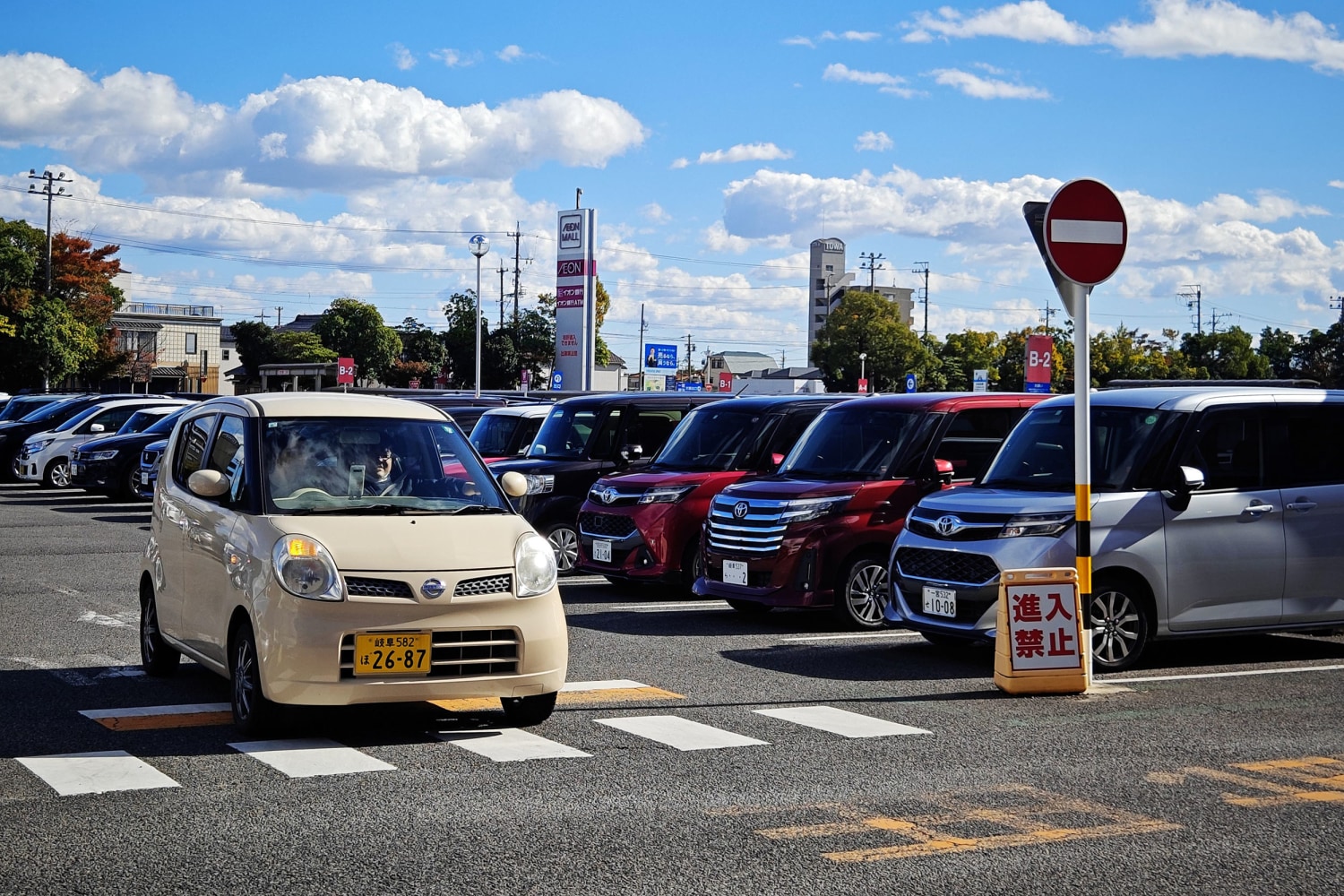
This perspective has led McChristian and a rising wave of drivers to focus on a vehicle segment long embraced in Japan yet still relatively unknown to many Americans: kei cars and kei trucks. Small, lightweight and modest in output, these vehicles embody a markedly different approach to mobility, emphasizing efficiency, affordability and appropriately scaled design rather than sheer size.
What are kei cars and why they exist
Kei vehicles take their name from the Japanese term “kei-jidōsha,” which translates roughly to “light automobile.” The category was created in Japan in the aftermath of World War II, at a time when the country needed to stimulate its domestic auto industry while making personal transportation accessible to a population rebuilding from devastation. The government established strict limits on size, engine displacement and power output, and in return offered incentives such as reduced taxes, lower insurance costs and easier parking requirements.
Over the decades, kei cars and trucks have become a defining feature of daily life in Japan, particularly outside major metropolitan centers. They are not tied to a single brand; instead, they are produced by several manufacturers, including Honda, Suzuki and Daihatsu. While early versions were basic and utilitarian, modern kei vehicles now include a wide range of configurations, from boxy micro-vans to small pickup trucks and even electric models designed for urban use.
Typically, a kei truck is priced at about $10,000 in Japan, far below the cost of most new vehicles in the United States. Its engine, delivering nearly 60 horsepower, provides only a small share of the output found in full-size American pickups, yet it still handles short commutes, neighborhood deliveries and everyday tasks with ease. In a country defined by tight streets, scarce parking and densely packed communities, this kind of engineering becomes an advantage rather than a concession.
The contrast with American vehicle culture
The allure of kei vehicles becomes even more evident when set against dominant trends in the U.S. auto market, where cars and trucks have grown steadily larger, heavier, and more powerful over recent decades, and where pickup models such as the Ford F-150—often boasting engines with more than 300 horsepower and the capacity to tow several thousand pounds—top sales charts despite many owners seldom hauling substantial loads or leaving paved roads.
This surge has been fueled by a blend of shifting consumer tastes, evolving safety standards, and fuel economy regulations that unintentionally give an edge to larger models. Long-distance comfort, the perceived security that comes with extra mass, and cultural ties to toughness and autonomy all contribute. As prices have risen, so has the belief that a more sizable vehicle delivers greater overall value, even when much of its potential goes unused.
Kei vehicles challenge this logic directly. They ask a simple question: what if most drivers chose a vehicle designed for what they actually do, rather than for hypothetical scenarios? For supporters like McChristian, the answer lies in a return to practicality. He points out that for the cost of shipping his imported kei truck to the United States, he still paid far less than he would for even a used domestic pickup, while gaining reliability and utility suited to his needs.
Growing interest and high-profile attention
Interest in kei vehicles has slowly grown in the United States, fueled by online communities, specialty importers and advocates who see them as a solution to rising vehicle costs. Japanese export data shows a steady increase in kei vehicles being shipped abroad, with American buyers drawn by low maintenance expenses and mechanical simplicity.
This niche interest received a significant boost when former President Donald Trump publicly praised the vehicles after seeing them during a visit to Japan. Describing them as small, appealing and efficient, he openly wondered how such cars might fare in the American market. Shortly afterward, he claimed to have approved the idea of producing “tiny cars” domestically, emphasizing their affordability, fuel efficiency and safety.
While the remarks generated headlines, they also raised practical questions. Trump’s comments appeared to focus less on importing Japanese kei vehicles and more on the idea of building similar small cars in the United States. That distinction matters, because importing existing kei cars and manufacturing new ones to U.S. standards involve entirely different legal, economic and regulatory challenges.
Safety standards and regulatory barriers
One of the most significant obstacles facing kei vehicles in the United States is compliance with federal safety regulations. Many kei cars, especially older models, lack features that are standard or mandatory in the U.S., such as airbags, advanced crash structures and modern electronic safety systems. As a result, importing them is generally restricted to vehicles that are at least 25 years old, qualifying for an exemption from current safety standards.
Even then, the legality of operating kei vehicles varies widely by state. Some states allow them on public roads with minimal restrictions, while others limit their use to low-speed areas or ban them altogether. This patchwork of laws creates uncertainty for owners and complicates efforts to expand their presence.
Advocacy organizations such as Lone Star Kei, under the leadership of McChristian, have pushed for revisions to local rules, insisting that these vehicles can safely operate alongside larger automobiles when handled responsibly; nevertheless, specialists emphasize that the safety issues involved are considerable, as guiding a compact, lightly constructed vehicle at highway speeds next to sizable SUVs and pickups introduces genuine hazards, especially for families or those traveling long distances.
Manufacturing challenges and economic realities
Even if regulatory hurdles were eased, creating kei-style vehicles in the United States would still present major challenges, as automotive production demands substantial capital and developing a brand‑new platform that satisfies U.S. safety and emissions requirements carries a high price, while adapting an existing model often proves even more expensive.
Economists note that the American market has long found it difficult to sustain small, low-margin cars, and numerous compact models have vanished in recent years as buyers increasingly choose crossovers and trucks; from the viewpoint of manufacturers, a $10,000 vehicle offers only modest profit potential once higher labor expenses, regulatory obligations, and domestic supply chain requirements are taken into account.
As a result, any kei-inspired vehicle built in the U.S. would likely cost significantly more than its Japanese counterpart. That price increase could undermine one of the category’s main selling points: affordability. While some barriers could theoretically be addressed through legislation or updated safety rules, experts remain skeptical that such changes would happen quickly or comprehensively.
Where small vehicles could make sense
Despite these challenges, there are specific contexts in which kei-style vehicles could find a foothold in the United States. Dense urban areas, where parking is scarce and trips are short, are often cited as ideal candidates. Cities like New York or Chicago, where congestion and space constraints are constant issues, could benefit from a shift toward smaller vehicles.
Retirement communities and planned developments represent another promising niche, especially in regions like Florida where golf carts already function as common local transport, and Kei vehicles could fill a comparable role while providing broader capabilities and better protection from the elements.
Even proponents acknowledge, however, that such cars would likely remain secondary or tertiary vehicles for most American households. Long road trips, interstate commuting and family travel still favor larger, more comfortable vehicles in the eyes of many consumers.
A question of culture as much as policy
Ultimately, the debate over kei vehicles in the United States is not just about regulations or manufacturing costs. It is also about culture. American driving habits, expectations and identities have been shaped by decades of wide highways, suburban development and an abundance of space. In that context, the appeal of a tiny truck can seem limited or even impractical.
As vehicle prices continue to climb, environmental concerns intensify, and urban lifestyles evolve, long-standing assumptions are being reassessed, and for many drivers the focus has shifted from how large a vehicle can be to how small it can stay while still covering daily needs.
Kei vehicles capture that inquiry at its most essential. They are built not to excel at everything, but to handle select tasks with notable efficiency and low cost. Whether this mindset will achieve wider traction in the United States is still unclear.
Curiosity about kei cars and trucks continues to rise, underscoring a central dilemma in contemporary transportation: weighing what people need against what vehicles can actually do. As Americans face the mounting expenses of owning a car and the persistent strain of crowded cities, their interest in alternative options is expected to endure, even if broad adoption is unlikely anytime soon.
For now, kei vehicles are likely to remain a niche yet devoted segment of the automotive world, supported by drivers who prize straightforward practicality rather than excess. Their continued role highlights that larger is not necessarily superior, and it suggests that the future of driving may still embrace more than a single notion of what a car ought to be.
Information extracted from NBC News.