

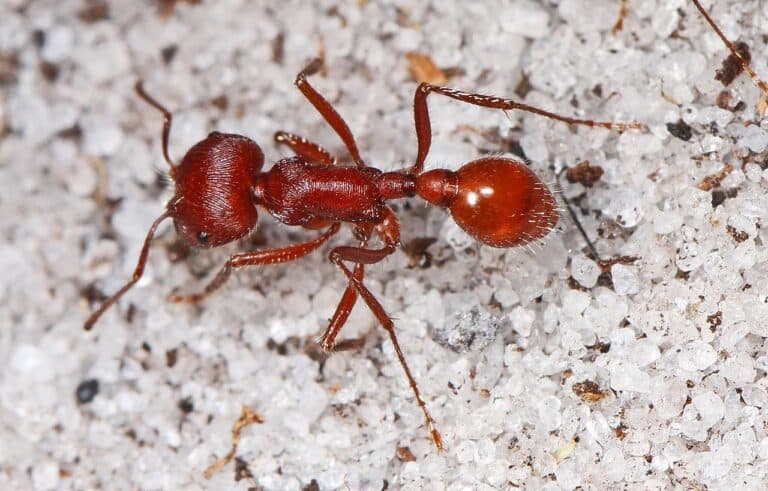
In an astonishing event in the natural world, an ant queen has been seen producing offspring from two completely distinct species. This uncommon occurrence provides fresh perspectives on genetics, evolution, and the complex social interactions within insect communities.
The discovery, reported by entomologists after careful observation and genetic analysis, challenges conventional understanding of ant reproduction. Typically, a queen ant produces offspring of her own species, ensuring colony uniformity and social cohesion. However, in this unusual case, the queen was found to have generated offspring that belong to two separate species, a scenario that scientists describe as extraordinary and highly rare.
This phenomenon offers a remarkable chance for scientists to explore the fundamental mechanisms of reproductive biology, hybridization, and genetic adaptability in insects. The effects go beyond ants, providing insight into evolutionary processes that might happen under certain environmental or genetic situations.
The science behind the phenomenon
Ant colonies are often celebrated for their complex social structures, with the queen serving as the reproductive heart of the colony. In most species, she produces eggs that develop into workers, soldiers, or new queens, all sharing a consistent genetic lineage. The emergence of offspring from two species disrupts this norm and prompts questions about genetic compatibility, reproductive strategies, and species boundaries.
Scientists participating in the research carried out comprehensive DNA tests to verify the identities of the progeny. Their discoveries indicated that the queen’s eggs had unexpectedly varied at the genetic level, leading to one group developing into members of her own species while another group belonged to a species that is closely related. Events like these are extremely uncommon and propose either unidentified reproductive processes or atypical environmental factors that impact gene expression.
The phenomenon is not only fascinating but also scientifically significant. It challenges long-held assumptions about reproductive isolation and species fidelity in ants. Understanding how and why this dual-species reproduction occurred could illuminate broader principles of evolution, adaptation, and genetic flexibility among social insects.
Implications for evolutionary biology and genetics
Esta revelación tiene profundas consecuencias para la biología evolutiva. Usualmente, las especies se definen por su capacidad de reproducirse exitosamente dentro de un linaje específico. No obstante, el caso de una reina hormiga produciendo dos especies difumina estos límites, sugiriendo que en determinadas circunstancias, las barreras reproductivas pueden ser superadas o evitadas.
Some scientists speculate that such occurrences might represent a rare form of hybridization or genetic anomaly that could provide evolutionary advantages in particular environments. For example, producing offspring of two species might allow a colony to diversify its workforce, adapt to new ecological niches, or increase resilience against environmental pressures.
From the perspective of genetics, the scenario represents a natural study into gene expression and inheritance. Scientists have the opportunity to analyze how one person can impact the development of descendants with varied characteristics and investigate the molecular processes that enable such uncommon reproductive results. These findings might have implications extending past entomology, contributing to wider research on genetic regulation, mutation, and the evolution of complex features.
Social dynamics within the colony
The birth of two species within one colony raises questions about social cohesion and organization. Ant colonies rely on communication, chemical signaling, and cooperative behavior to function efficiently. Offspring from two distinct species could introduce new challenges for colony management, including differences in behavior, task specialization, or interaction patterns.
Entomologists noted that, in spite of genetic variations, the colony maintained impressive stability. This finding implies that ant social systems might be more flexible than once believed, as they can incorporate genetic diversity without falling apart. It also underscores the possible influence of environmental signals and chemical communication in preserving unity even with genetic differences.
Grasping the ways in which colonies manage these irregularities might illuminate foundational aspects of societal evolution. Specifically, it could uncover how collaborative structures sustain themselves despite genetic differences, providing insights similar to research on social conduct in various species, humans included.
Environmental elements and possible catalysts
Although the exact reasons behind this uncommon reproductive occurrence are still being studied, researchers are investigating various possible catalysts. Factors like environmental stress, including shifts in temperature, food supply, or habitat disturbances, might impact gene expression in a manner that encourages atypical reproductive results.
Additionally, interactions with species closely related in the neighboring environment might influence this. Some scientists propose that contact with chemical signals or pheromones from other species could initiate developmental processes resulting in cross-species reproduction. If validated, this mechanism would demonstrate a sophisticated connection among genetics, environment, and social behavior that is more complex than previously understood.
Future studies are likely to focus on replicating these conditions in controlled laboratory settings, testing how environmental variables influence reproductive outcomes. These experiments could help clarify whether the phenomenon is a rare anomaly or a natural strategy that occurs under specific ecological circumstances.
Broader impact on entomology and conservation
The discovery of a queen producing offspring from two species has significant implications for entomology and biodiversity research. It challenges assumptions about species boundaries, reproductive fidelity, and colony dynamics, providing new avenues for study in evolutionary biology and ecology.
Additionally, the discovery might have an impact on conservation approaches. Numerous ant species perform essential functions in ecosystems, including pollination, seed dispersal, and soil engineering. By comprehending how genetic diversity and atypical reproductive behaviors impact the resilience of colonies, it could guide initiatives to safeguard threatened species and uphold ecological equilibrium.
By studying rare events like dual-species reproduction, scientists gain insights into the adaptability and complexity of social insects. This knowledge could help anticipate how species respond to environmental change, invasive species, or habitat fragmentation, enhancing conservation efforts and ecological management.
Interest from the public and learning potential
Unusual discoveries like this one capture public interest and provide excellent opportunities for science education. The notion of a queen ant giving birth to two species is visually striking, easy to communicate, and naturally sparks curiosity. Educators can use this case to teach genetics, evolution, and social behavior in a way that is both engaging and memorable.
Outside of educational settings, these tales underline the unexpected and astonishing elements found in nature. They serve as reminders to society that the field of science is brimming with surprises, and that even extensively researched species can uncover unexplored phenomena. This feeling of amazement is crucial for fostering a wider understanding and appreciation for scientific investigation and the significance of examining various ecosystems.
The observation of a queen ant producing offspring of two distinct species is an extraordinary event with implications for genetics, evolution, ecology, and social behavior. It challenges conventional understanding of species boundaries, provides insights into the adaptability of social insect colonies, and sparks public curiosity about the natural world.
As scientists continue to investigate the genetic, environmental, and behavioral factors behind this phenomenon, the findings are likely to contribute to broader knowledge of evolutionary mechanisms and reproductive biology. While rare, such discoveries highlight the complexity and unpredictability of life, demonstrating that even in the well-ordered world of ant colonies, surprises can arise.
Este evento destaca la importancia de seguir investigando los insectos sociales y sus funciones ecológicas. Al examinar anomalías como la reproducción de especies duales, los científicos obtienen una comprensión más profunda de la adaptación, la resiliencia, y la interacción entre la genética y el ambiente, lo que representa el interminable encanto del mundo natural.