

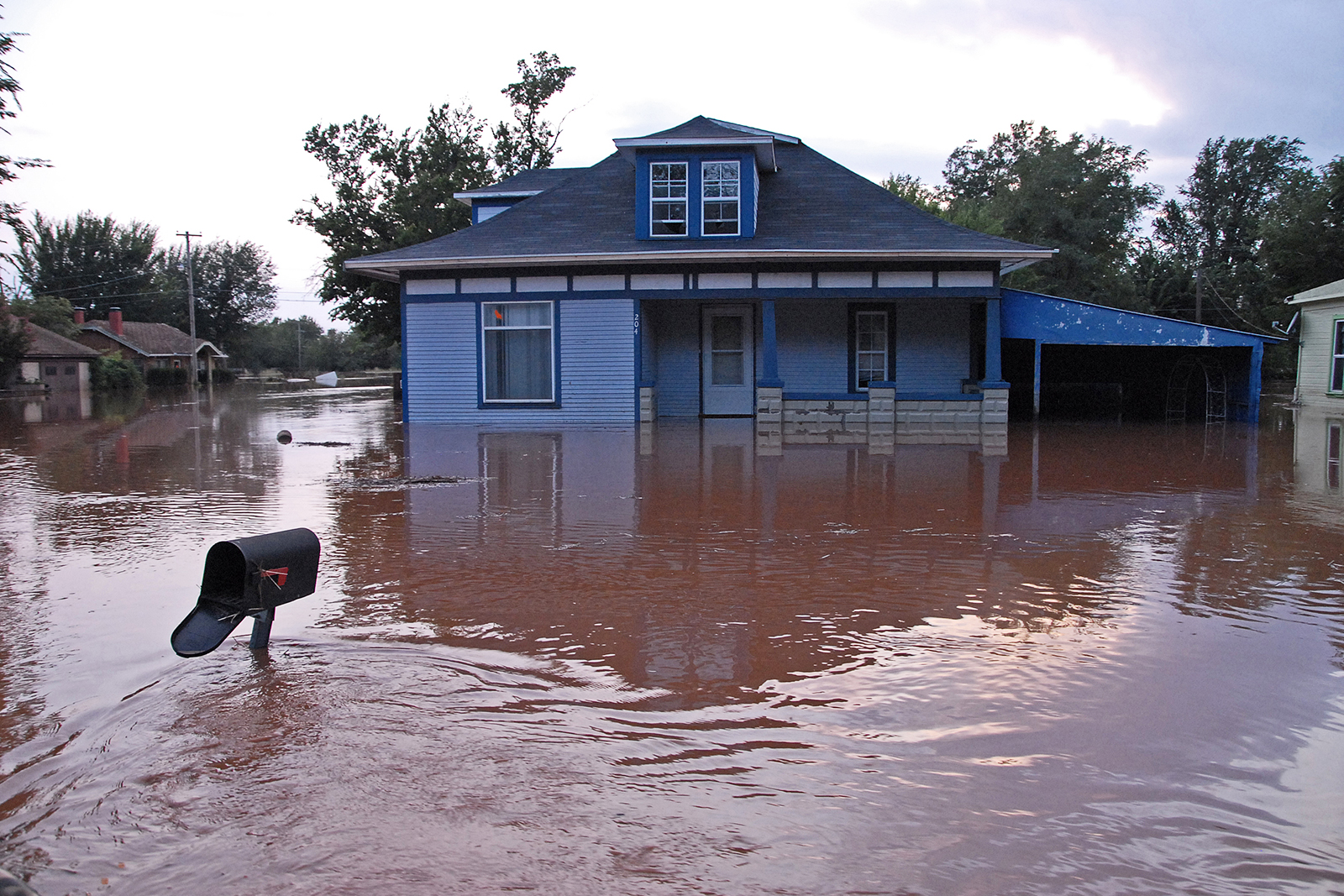
The charts meant to assist in making decisions regarding flood hazards nationwide are progressively being revealed as a concealed threat rather than a remedy. The flood maps produced by the Federal Emergency Management Agency (FEMA), which serve as the main resource for evaluating a property’s risk, are showing signs of obsolescence. This situation leads to a significant and perilous contradiction, as property owners and investors are frequently led to a misleading sense of safety, unknowingly accepting risks that are much higher than they are aware of. This widespread problem is transforming the housing market and how homeowners view their financial liabilities.
For decades, the FEMA flood maps have served as the authoritative guide for determining flood insurance requirements and property risk. A home’s designation on these maps dictates whether a lender will mandate flood insurance as a condition of a mortgage. If a property is not in a designated high-risk flood zone, the homeowner is not required to carry flood insurance, and they may choose to forgo it, believing their risk is minimal. This reliance on outdated data creates a massive gap between the perceived risk and the actual risk, setting the stage for future financial devastation.
A significant factor contributing to the diminishing significance of these maps is the quickening effects of climate change. These maps rely on past data, yet the circumstances that led to those historical flood occurrences can no longer be trusted to predict what’s to come. Higher sea levels, more severe and frequent rainstorms, and alterations in land utilization have drastically modified flooding patterns nationwide. A location previously deemed secure based on a centennial flood occurrence might now be in a prominent flood-prone area, a fact that the maps have not yet acknowledged.
The maps’ shortcomings are most acutely felt in the “in-between” areas—places that are not officially in a high-risk zone but are still highly vulnerable. Many of the most significant flood damages in recent years have occurred in these very areas. The homeowners in these zones are often the most exposed, as they are not required to have flood insurance and are therefore uninsured when a disaster strikes. This creates a critical vulnerability for both individuals and communities, as these uninsured losses create a massive economic burden on the local and federal government in the form of disaster relief.
The financial incentive to ignore risk is deeply embedded in the current system. When a property is not in a high-risk flood zone, it is often more appealing to buyers and easier to sell. The lower insurance costs and the perceived safety can create a market premium for these properties, even if they are in a real-world flood path. This economic dynamic incentivizes all parties—homeowners, real estate agents, and lenders—to rely on the outdated maps rather than engaging in a more thorough and costly risk analysis. The system as it is currently structured rewards ignorance, not caution.
The financial impact of this imperfect system is extensive. When severe flooding hits an uncharted region, the ensuing damage to properties causes a surge in foreclosures, a drop in nearby property values, and significant economic turbulence locally. The expenses for reconstruction unjustly burden federal taxpayers and families who lack insurance, creating a cycle of debt and recuperation that may last for years. These antiquated maps are thus more than mere mapping mistakes; they trigger economic instability.
One of the significant obstacles FEMA encounters is the high expense and complexity involved in revising the maps. This task is enormous, necessitating detailed hydrological modeling, comprehensive data gathering, and collaboration among various government bodies. The undertaking is costly and demands a lot of time, with the agency’s funding frequently not keeping up with the rapid environmental changes. This logistical situation implies that despite FEMA’s efforts to produce more precise maps, the updated versions might become outdated by the release time.
The procedure of revising the maps is additionally filled with political obstacles. When a property gets reclassified into a flood zone with high risk, it can be a significant setback for the property owner, as it might lead to a sharp drop in property value and a substantial rise in insurance expenses. This situation typically results in intense resistance from homeowners and local officials, who are hesitant to witness the decline in their community’s real estate values. Such opposition generates a strong deterrent for authorities to make a move, even when the information indicates an obvious and immediate threat.
The real estate industry also plays a significant role in this flawed system. Realtors, lenders, and appraisers are all part of an ecosystem that relies on the official FEMA maps. While some are now starting to use more advanced, private-sector risk models, the industry as a whole is still slow to adapt. A more accurate and responsible approach would involve a fundamental shift in how risk is assessed and disclosed to buyers, moving beyond the official maps and towards a more comprehensive and forward-looking analysis of a property’s vulnerability.
The answer to this issue is found in a basic change in accountability and an increased dependence on cutting-edge technology. Property owners and financial backers can no longer depend exclusively on public maps. They need to be proactive in comprehending their actual risk of flooding by utilizing private sector simulations, local expertise, and an understanding of climate change patterns. The upcoming phase in evaluating flood risk will probably harness artificial intelligence and machine learning, able to handle large volumes of data to produce more adaptive and predictive models than the outdated static maps.
The dependence on old federal flood maps is leading to a risky and unviable scenario in the real estate sector. These maps, initially designed for direction, have turned into a source of misleading assurance, prompting property owners to engage in risks beyond their comprehension. The threats posed by climate change, financial motivations, and political resistance are increasing the disparity between the perceived risks on maps and the actual hazards. Consequently, a fresh phase of individual accountability and technological advancement is required to safeguard both property owners and the larger economy from the catastrophic impacts of residing in perilous areas.