
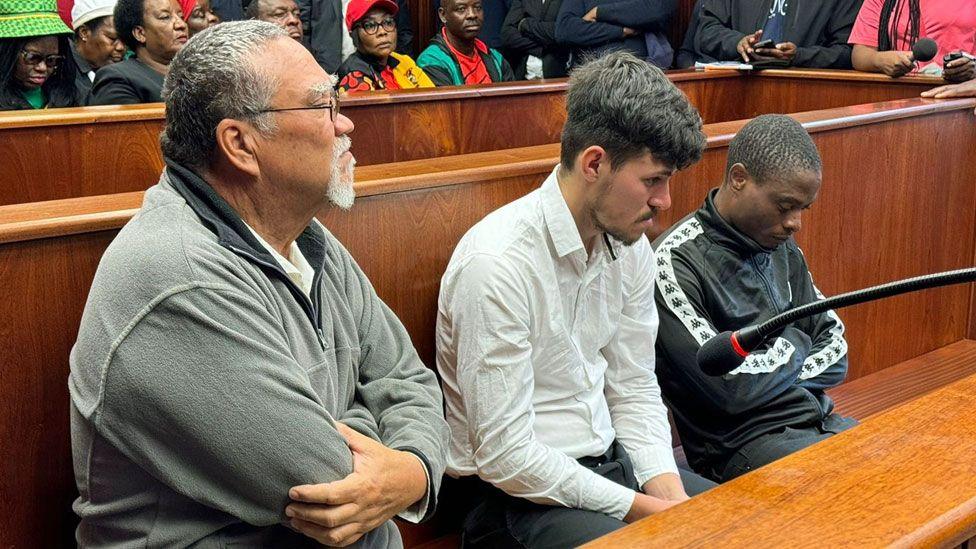
In South Africa, a case unfolding in the courts has drawn national and international attention due to its disturbing allegations and the broader social tensions it evokes. A white farm owner is currently on trial for the alleged murder of two Black women, with prosecutors accusing him of attempting to dispose of the victims’ bodies by feeding them to pigs on his property. The trial has become a focal point in conversations about racial violence, land ownership, and justice in post-apartheid South Africa.
The defendant, who manages and runs a business farm in a rural area of the nation, has entered a plea of not guilty to the allegations, which encompass two murder charges, hindering justice, and infringing on personal dignity. The prosecution alleges that the farm manager deliberately targeted the victims, two Black women in their twenties, and committed the offenses on his land before going to great lengths to hide the events.
According to court documents and statements from the investigating authorities, the two women had been reported missing days before their remains were discovered. Forensic experts later identified body parts consistent with human remains found in a pig enclosure on the accused’s farm. DNA testing confirmed the identities of the victims, whose families had raised concerns about their disappearance after they had reportedly visited the property for work-related purposes.
During preliminary hearings, the prosecution outlined a chilling sequence of events, alleging that the farm owner lured the women to the property under false pretenses before carrying out the attacks. Witnesses have provided testimony suggesting a history of verbal abuse and discriminatory behavior from the accused toward workers and community members in the area, which prosecutors argue demonstrates motive and premeditation.
The defense, on the other hand, has dismissed these allegations, describing the defendant as a reputable entrepreneur with no previous offenses. His defense team has cast doubt on the investigation’s credibility, accusing improper evidence handling and witness intimidation. They argue that the defendant was not involved in the victims’ fatalities and propose that another individual might have deposited the remains on the property.
As the trial progresses, the courtroom has become a site of emotional confrontation, with family members of the deceased calling for accountability and justice. Demonstrators have gathered outside the courthouse on several occasions, demanding that the case be handled with transparency and urgency. Some protestors have framed the case as part of a larger pattern of violence against Black South Africans, especially women, in rural communities where policing and oversight are often limited.
South Africa’s historical relationship with race is intricate and deeply marked by the apartheid-era land allocation and the persistent conflicts between white landowners and Black communities in countryside areas. This situation has stirred renewed discussions concerning racial fairness, gender-related violence, and the enduring power imbalances in agricultural zones. Advocates and leaders in the community contend that the violence should not be seen separately but rather as part of the wider picture of systemic inequality and past traumas.
Legal experts following the trial note that the outcome may set an important precedent in how crimes of this nature are prosecuted in South Africa. The case has also drawn interest from human rights organizations and international observers who monitor racial justice and women’s rights in the region. Many have expressed concern about the safety of vulnerable populations in under-resourced areas, where gender- and race-based violence often goes underreported or under-investigated.
In response to public concern, the South African Police Service has stated that it is conducting a thorough and impartial investigation. Authorities have pledged to allocate the necessary forensic resources and ensure that all procedural steps are followed properly. Government officials have also acknowledged the outcry and emphasized the importance of ensuring accountability in cases involving marginalized victims.
The broader national conversation sparked by this trial includes renewed calls for reform in rural policing, increased support for victims of gender-based violence, and more equitable land policies. Some lawmakers have proposed expanding rural justice initiatives and improving access to legal aid in remote communities, where individuals often lack the resources to pursue justice independently.
While they wait, the victim’s families persist in their quest for answers and closure. Communicating via legal representatives and regional media, they have shared their sorrow, anger, and a longing for justice that exceeds mere retribution — justice that recognizes the worth of the lives tragically lost and the wider suffering faced by communities dealing with similar challenges.
While the trial progresses, it serves as a challenge for South Africa to address complex realities concerning race, violence, and authority. As the judicial process evaluates the evidence and discussions, the general population will keep a close eye, wishing for a conclusion that upholds the value of equal legal protection and the respect for every person, irrespective of race, gender, or social standing.