

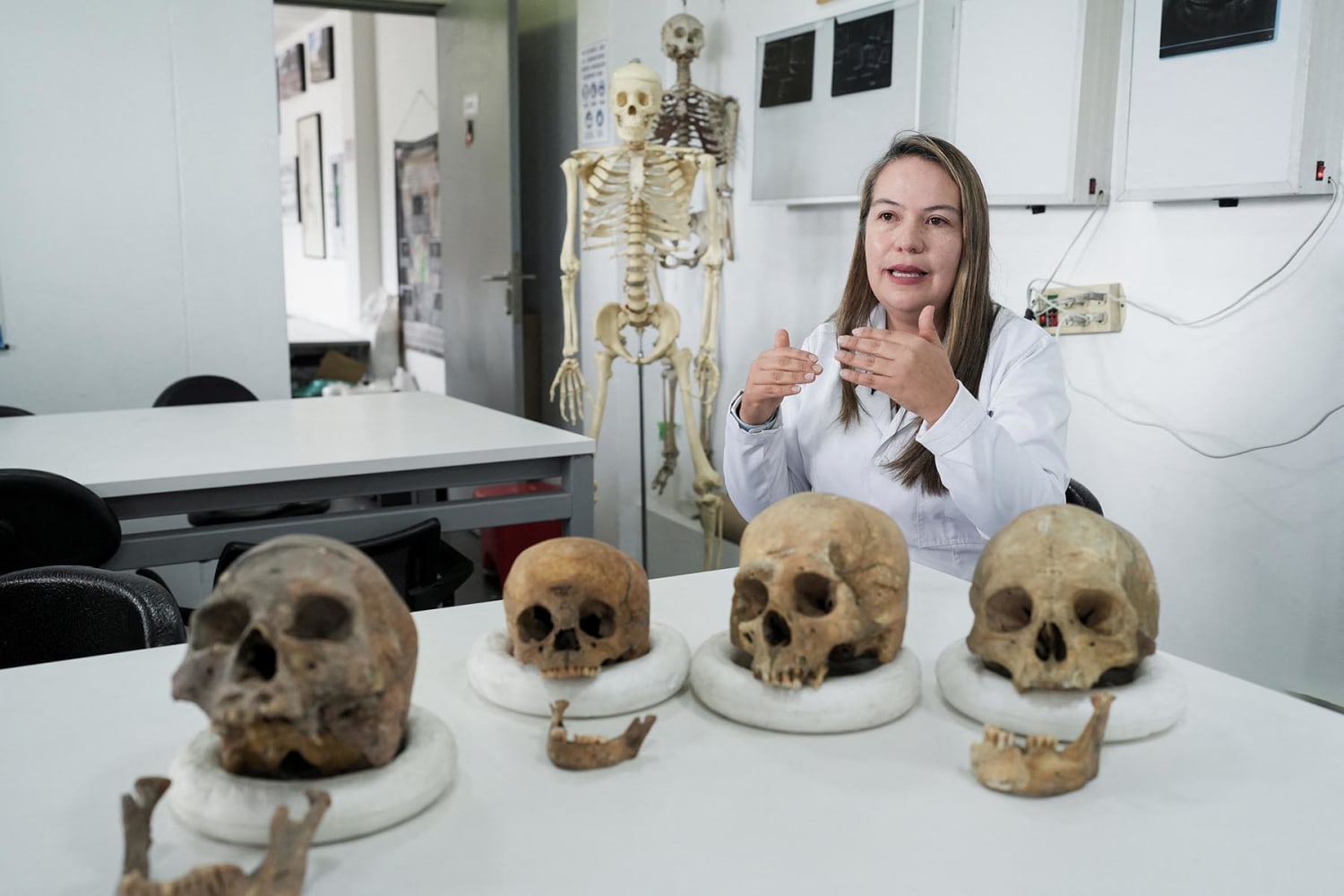
A group of researchers in Colombia has uncovered a finding that might redefine our knowledge of human history in the Americas. Through DNA sequencing from ancient remains discovered in the area, the team has uncovered signs of a previously unidentified human lineage. This discovery introduces a new phase in exploring early inhabitants on the continent and sheds light on the intricacy of human migration and development.
The project focused on remains that date back thousands of years, carefully preserved in archaeological sites that hold key information about the earliest inhabitants of South America. Genetic analysis of these samples revealed markers that do not correspond with any of the lineages currently known to science. This suggests that an entire branch of human ancestry, until now hidden from researchers, played a role in shaping the population history of the region.
For decades, anthropologists and geneticists have sought to trace the origins and movements of the first people who arrived in the Americas. It has long been accepted that early humans migrated across the Bering land bridge from Asia during the last Ice Age, spreading southward over time. However, findings like this challenge the simplicity of that narrative, showing that the genetic heritage of early populations was more diverse and interconnected than previously thought.
The Colombian scientists, working with international collaborators, utilized advanced DNA sequencing technologies to piece together genetic information from fragmented samples. Ancient DNA, or aDNA, is often highly degraded, making analysis difficult. Yet, with improved methods of extraction and sequencing, researchers can now recover meaningful data even from remains exposed to challenging environmental conditions such as heat and humidity, both common in Latin America.
Based on the scientists’ findings, the newly discovered lineage does not fit well with the primary ancestral groups recognized in the Americas. Rather, it shows a unique genetic pattern, indicating that there might have been several waves of migration or interaction with previously unrecorded populations. This implies that the peopling of the Americas was not a simple, unidirectional event, but rather a multitude of intricate interactions among various groups over thousands of years.
Archaeological evidence already hinted at this complexity. Distinct cultural artifacts, settlement patterns, and burial practices across different regions suggest that multiple groups with unique traditions coexisted and influenced one another. The genetic findings now provide biological support for these observations, reinforcing the idea that early human history in the Americas was shaped by diversity, adaptation, and interaction.
One of the most remarkable aspects of this research is its potential to fill gaps in the historical record. Written accounts of pre-Columbian civilizations in South America are scarce, and much of what we know comes from archaeological excavations. DNA analysis provides a new tool to reconstruct the lives of people who left no written records but whose genetic heritage persists. In this sense, ancient DNA serves as a bridge between the past and present, connecting modern populations with their ancestors.
The analysis further emphasizes the significance of performing studies within Colombia and throughout Latin America, areas that have frequently been overlooked in global conversations about human ancestry. By allocating resources to regional research and applying state-of-the-art technology, Colombian researchers are offering noteworthy advancements to a discipline typically led by research in North America, Europe, and Asia. This success highlights the importance of developing scientific capabilities in varied regions to produce findings of worldwide significance.
The consequences of this finding reach further than scholarly investigation. Comprehending the ancient genetic past of the Americas holds cultural and societal value, especially for Indigenous populations. Nowadays, numerous communities are keen on exploring their genealogical origins and maintaining their traditions. Although genetic studies must be carried out with care and deference, they can offer fresh insights into identity and the enduring connection between successive generations.
Simultaneously, the results prompt significant ethical deliberations. Collaborating with ancient remains requires meticulous cooperation with local populations and adherence to cultural customs related to the handling of ancestors’ remains. The Colombian group has highlighted the necessity of ethical research methods, making sure that scientific progress aligns with cultural awareness.
As the domain of ancient DNA studies expands, additional findings like these are anticipated. Every new piece of evidence contributes to the intricate mosaic of human history, revealing that our past is much more complex than once thought. Especially in South America, with its vast unexplored regions and numerous archaeological sites still to be examined, the opportunities for remarkable discoveries are extensive.
Scientists believe that this new lineage could help explain genetic variations observed in modern populations that do not fully match known ancestral profiles. By studying these connections, researchers hope to better understand how ancient migrations shaped today’s genetic diversity across the continent. Future studies may even reveal interactions between this unknown lineage and other populations, offering clues about cultural exchanges, survival strategies, and adaptation to changing environments.
The finding also showcases the influence of technological advancements in scientific research. Ten years ago, analyzing severely degraded DNA in tropical environments would have been almost unachievable. Nowadays, improvements in genome examination enable researchers to uncover secrets that were unreachable for ages. As methods keep evolving, more data will probably surface from specimens that were once thought inappropriate for examination.
For now, the identification of this unknown human lineage represents a milestone for Colombian science and for the study of human origins worldwide. It adds depth to our understanding of the ancient past and challenges assumptions about the simplicity of migration patterns into the Americas. Ultimately, the research demonstrates that human history is not a straight line but a complex web of connections, interactions, and adaptations that shaped the world as we know it.
The group responsible for this research has indicated intentions to broaden their investigation by examining more remains from various parts of Colombia and other regions. These studies have the potential to determine if this lineage was common throughout South America or restricted to certain locales. Moreover, they could shed light on the duration of this group’s existence and if it made enduring contributions to present-day genetic variation.
By continuing to explore these questions, scientists hope to move closer to a comprehensive picture of the first peoples of the Americas. Each fragment of DNA recovered from ancient remains adds a new piece to the puzzle, offering a glimpse into the lives of those who walked these lands long before written history began.
The Colombian discovery is not just about science. It is a reminder of the resilience of human memory, carried silently in our genes across generations. The revelation of an unknown lineage hidden in the DNA of ancient remains shows that the story of humanity is still unfolding, with many chapters yet to be written.