

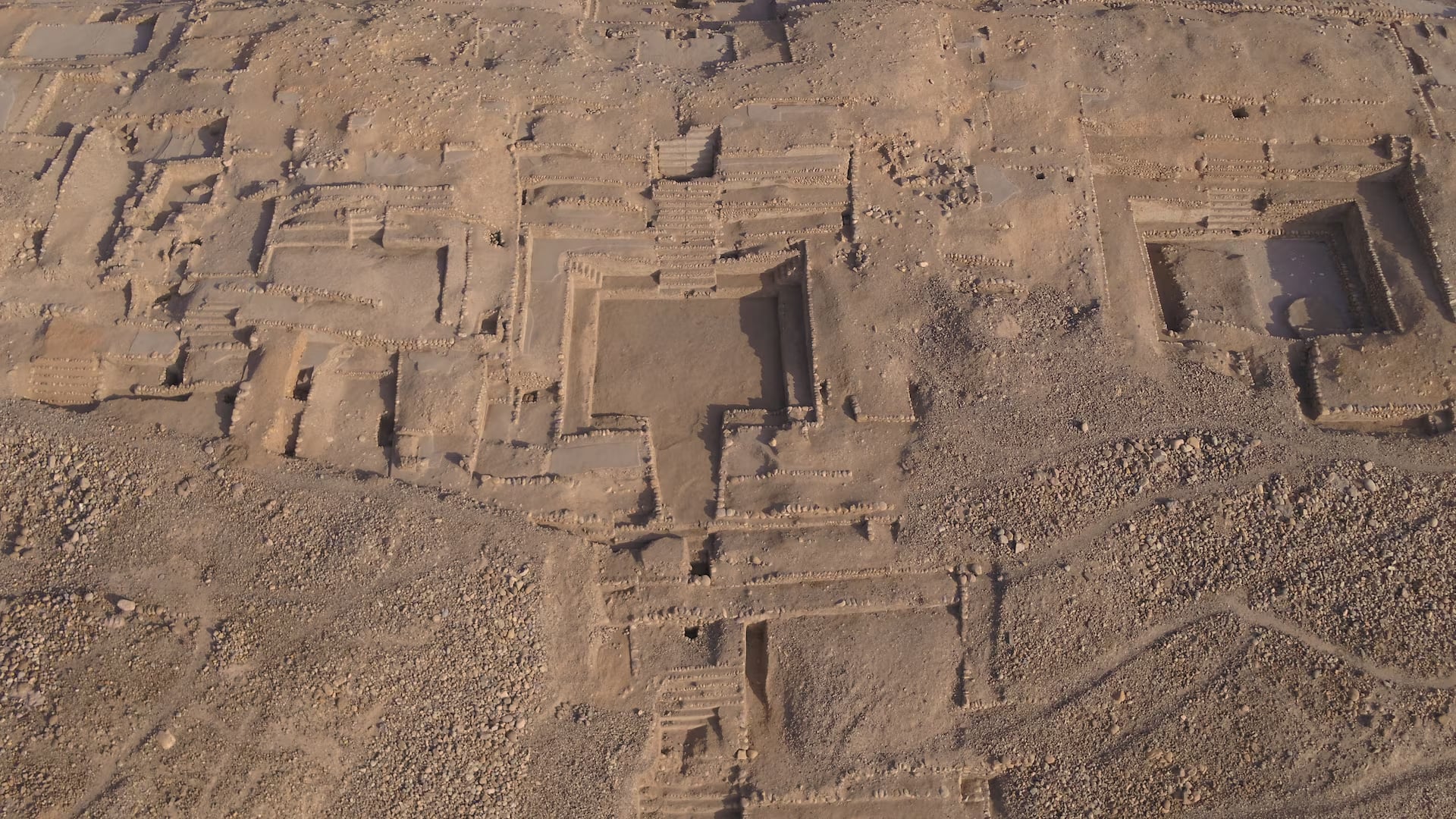
A team of archaeologists in Peru has brought to light the remains of a 3,500-year-old city, offering new insights into the region’s pre-Columbian history and shedding light on early urban development in the Americas. This extraordinary discovery, located in the coastal desert region of northern Peru, is being hailed as one of the most significant archaeological finds in recent decades.
The ancient settlement, uncovered after years of careful excavation, provides valuable evidence of complex social organization, architectural innovation, and ceremonial practices that date back to a period well before the rise of more widely known Andean civilizations such as the Moche or Inca. The site is believed to belong to the ancient Casma–Sechin culture, one of the earliest societies in South America known for its monumental architecture and sophisticated ceremonial centers.
Archaeologists spearheading the project call the finding a glimpse into the initial development of urban hubs in the Americas, holding a similar level of importance to ancient communities in Mesopotamia, Egypt, or the Indus Valley. The city that has been recently uncovered showcases the complex design and social organization of a civilization whose story has largely been obscured by layers of sand and the passage of time.
The city is distinguished by its impressive attributes such as large stone walls, ceremonial squares, elevated platforms, and living areas, all built using materials from the area. The design illustrates that the settlement served as a political and economic center, in addition to being a hub for spiritual and cultural functions. The architecture showcases a degree of planning and organization, indicating a central governing body and a coordinated workforce.
The importance of this finding lies in the proof of early city development. The existence of broad streets, water management channels, and strategically placed structures reveals that the residents possessed advanced techniques for handling both their surroundings and the social interactions of urban living. This level of intricacy questions prior beliefs that extensive city formation in the Americas happened solely with later societies.
The site also contains numerous ceremonial structures adorned with intricate carvings, including depictions of deities, animals, and geometric patterns. These artistic elements suggest that religion played a central role in the community, possibly serving as the ideological glue that held the society together. Archaeologists have also uncovered a variety of ceremonial offerings, including pottery, stone tools, and remnants of food, providing additional clues about the daily lives and spiritual beliefs of the city’s residents.
Radiocarbon dating of materials from the site has confirmed the age of the settlement at approximately 3,500 years, placing it within the Late Preceramic or Initial Period of Andean prehistory. This era is characterized by the emergence of sedentary agricultural societies that began to develop monumental architecture and complex social hierarchies. The city’s size and layout suggest that it was home to thousands of people, making it one of the earliest known examples of large-scale urban living in the Americas.
El hallazgo no solo es importante por su antigüedad y dimensión, sino también por la comprensión que ofrece sobre el desarrollo de las primeras civilizaciones en una región que a menudo es eclipsada por las más famosas culturas de los altos Andes. La cultura Casma–Sechin, que prosperó en la costa norte de Perú, es menos conocida a nivel internacional pero ha sido reconocida durante mucho tiempo por los arqueólogos debido a sus monumentales construcciones de piedra y su enigmática iconografía.
The location of the site is within an area that has undergone extensive archaeological study over the years. However, the recently discovered city’s astounding scope and preservation make it unique. Numerous buildings are extraordinarily well-preserved, having been safeguarded for thousands of years under the layers of desert sand. This remarkable preservation has enabled researchers to examine the initial design and architectural elements with outstanding precision.
Archaeologists are particularly excited about the potential to learn more about the daily lives of the city’s inhabitants. Preliminary excavations have revealed domestic spaces, storage areas, and evidence of food production, including remains of cultivated plants such as maize, beans, and squash. Animal bones suggest the consumption of both domesticated animals and marine resources, indicating a diverse and adaptable diet.
The finding has also sparked fresh inquiries regarding the connection between various early societies along the Peruvian coastline. Scientists are currently investigating how this historic city might have connected with other nearby communities, either through commerce, conflict, or the exchange of cultural practices. The location could provide significant insights into the dynamics that prompted the rise of intricate societies in ancient South America.
Local government bodies and heritage institutions are collaborating with archaeologists to safeguard and conserve the site. Considering the site’s potential for tourism and educational purposes, conversations have begun on how to manage public access while ensuring preservation. The government of Peru has shown firm backing for the current research, acknowledging the discovery as a significant component of the nation’s rich cultural heritage.
The group directing the excavation comprises specialists from universities in Peru alongside international partners with expertise in archaeology, anthropology, and conservation science. Their multidisciplinary strategy integrates conventional digging methods with advanced technologies like 3D scanning, drone mapping, and geophysical assessments. These instruments assist researchers in constructing comprehensive representations of the site while reducing disruption to delicate structures.
As excavation work continues, the team hopes to uncover more information about the social and political organization of the ancient city. Early findings suggest that the society may have been stratified, with elites occupying larger, more elaborate residences close to ceremonial centers, while common people lived in more modest dwellings on the periphery. Evidence of specialized craft production, including pottery and textile-making, hints at a diversified economy that supported artisans as well as farmers.
The religious life of the city is another area of intense interest. The ceremonial plazas and monumental platforms are believed to have served as stages for public rituals, festivals, and possibly astronomical observations. Some structures appear to align with celestial events, reflecting the importance of seasonal cycles in the agricultural calendar and spiritual life of the community.
One significant challenge that archaeologists encounter is understanding the symbolic meanings behind the carvings and artistic motifs at the site. The iconography features both human and animal figures, some possibly depicting mythological creatures or ancestors. Comprehending these symbols can offer important insights into the belief systems and worldview of this ancient culture.
Este hallazgo ha sido comparado con otros centros urbanos antiguos en Perú, como Caral, otro sitio monumental precolombino situado más al sur. Aunque cada asentamiento tiene características particulares, en conjunto muestran que sociedades complejas prosperaban en las Américas mucho antes del surgimiento del Imperio Inca. Estos descubrimientos están llevando a los estudiosos a reconsiderar las cronologías y trayectorias de las civilizaciones tempranas en la región.
The international archaeological community has welcomed the discovery, noting that it contributes to a growing body of evidence that the Americas were home to some of the world’s earliest and most innovative urban societies. The uncovering of the 3,500-year-old city serves as a powerful reminder that human ingenuity and social organization have deep roots in every corner of the globe.
As new layers of this ancient city are unearthed, archaeologists hope to answer enduring questions about how early societies in South America organized themselves, adapted to challenging environments, and laid the foundations for later civilizations. Each artifact, structure, and symbol brings researchers one step closer to understanding the rich tapestry of human history that unfolded on the Peruvian coast thousands of years ago.
The project is still ongoing, and scientists predict that additional digs could continue for several years, perhaps even decades. However, the preliminary results already provide an extraordinary view into a bygone era, reminding us that history still contains myriad tales to be uncovered beneath the ground.