
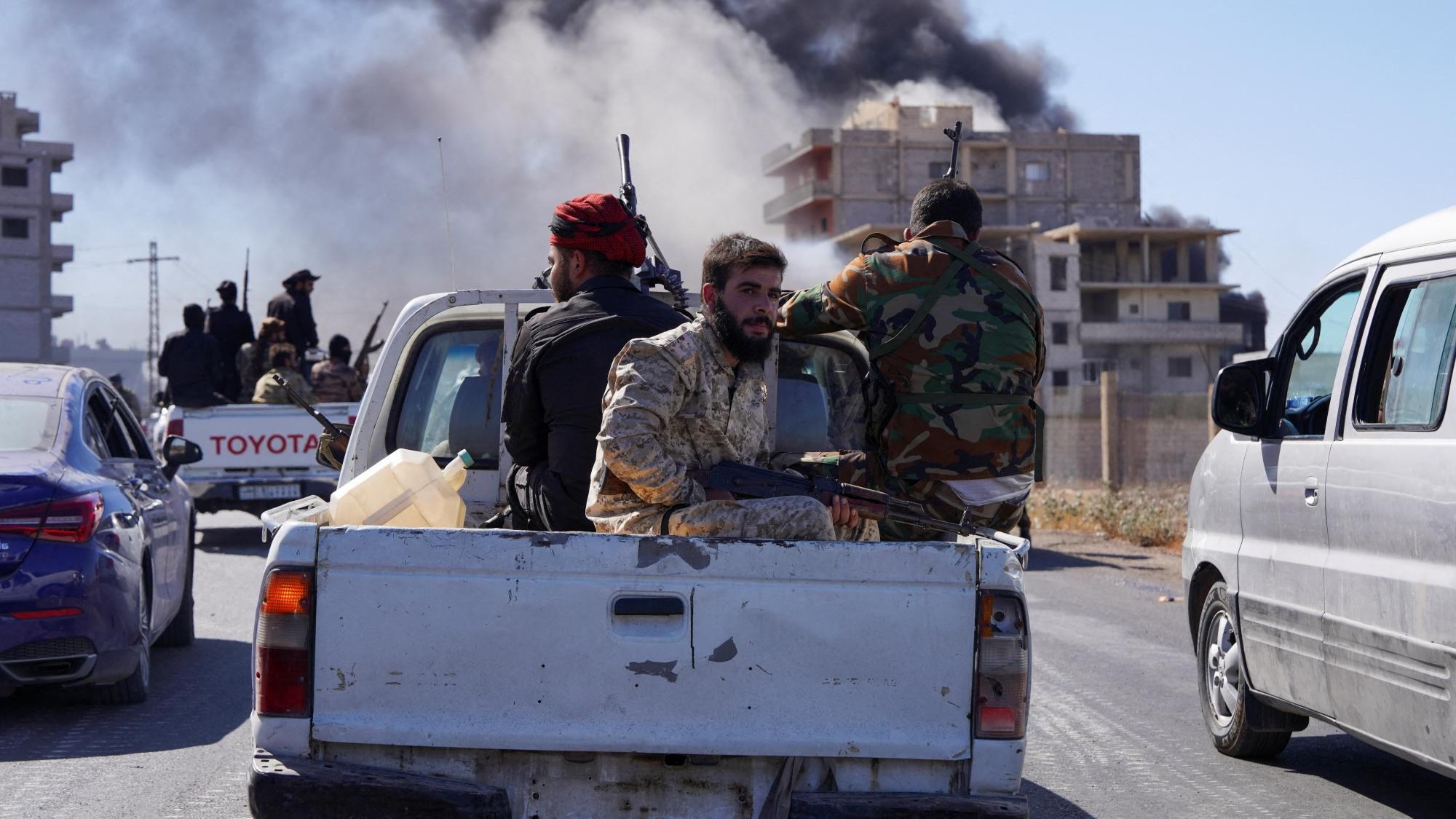
The latest confrontations have intensified when Israeli forces attacked Syrian soldiers moving into a city inhabited by the Druze community in the midst of persistent sectarian strife. This situation underscores the intricate and unstable dynamics in the area, where overlapping disputes among different ethnic, religious, and national groups keep driving unrest.
The Druze community, a distinct religious and ethnic minority primarily residing in parts of Syria, Lebanon, and Israel, has often found itself caught in the crossfire of broader regional conflicts. The city in question, known for its significant Druze population, has experienced rising sectarian clashes that prompted Syrian forces to move in, presumably to assert control or stabilize the area.
Israel’s response involved aerial bombardments aimed at Syrian military positions encroaching on the city’s vicinity. The Israeli Defense Forces (IDF) justified the strikes as a necessary measure to prevent further Syrian military presence in a sensitive border region and to protect local communities from potential spillover violence. This action underscores Israel’s ongoing strategic interest in curbing Syrian and allied forces’ advances near its borders.
Sectarian clashes within the city have reportedly involved violent confrontations between different religious or ethnic groups, exacerbating long-standing tensions. These conflicts often stem from political, social, and historical grievances that have been intensified by the Syrian civil war and regional rivalries. The Druze population, known for its cautious approach to the conflict, has sought to maintain neutrality, but the escalation has placed them under increasing pressure.
The dispatch of military units by the Syrian government into the urban area could be seen as an effort to regain control over turbulent regions amidst a divided political scene. Nonetheless, these actions may escalate local conflicts and involve nearby nations more deeply in the turmoil. Israel’s involvement indicates its wider security approach to stop adversarial forces from establishing themselves near its frontiers and to discourage the influence of Iran and Hezbollah in Syria.
The scenario is continuously evolving, with accounts of civilian casualties and displacement as they are trapped in the conflict. Concerns over humanitarian needs are increasing, as the threat of broader escalation puts regional stability at risk. Aid groups are encountering difficulties in providing help due to the insecurity and disputed territorial claims.
International reactions to the events have varied. Some groups advocate for calm and discussion to reduce tensions, while others stress the validity of Israel’s defensive actions to protect its boundaries. The United Nations and various diplomatic entities have encouraged all involved to prevent more violence and to focus on protecting civilians.
This segment is part of a larger pattern of sporadic skirmishes and military actions in southern Syria and near the Israeli frontier. The area continues to be a central point for proxy wars involving a variety of state and non-state entities, such as the Syrian government, opposition groups, Iran-supported militias, Hezbollah, and Israeli military units. All participants have strategic goals that frequently clash, adding to an unstable security situation.
The situation of the Druze community is notably sensitive. Throughout history, they have aimed to maintain their independence and safety by adopting a practical strategy, frequently managing alliances cautiously to prevent provoking powerful entities. The current conflicts and external military actions risk upsetting this equilibrium, possibly necessitating tough decisions for regional leaders and inhabitants.
As tensions persist, the risk of broader military escalation looms. Continued Israeli strikes could provoke retaliatory actions by Syrian or allied forces, further entangling regional actors. Diplomatic efforts face significant obstacles given deep-seated mistrust and competing interests.
Monitoring the humanitarian impact remains critical. Displacement, damage to infrastructure, and disruption of essential services pose immediate challenges for civilians. Longer-term consequences could include shifts in demographic patterns and exacerbation of sectarian divides.
The global community is confronted with the challenging task of tackling security issues while encouraging conversation and reconciliation. It requires a careful approach and long-term dedication to balance respecting sovereignty with the necessity to safeguard vulnerable groups and avert broader conflict.
The recent Israeli airstrikes on Syrian forces entering a Druze city following sectarian clashes underscore the ongoing volatility in the region. This incident reflects the intricate web of local, national, and international factors that fuel conflict in Syria and its border areas. As the situation evolves, efforts to de-escalate violence, protect civilians, and pursue political solutions remain essential to fostering stability and peace.