

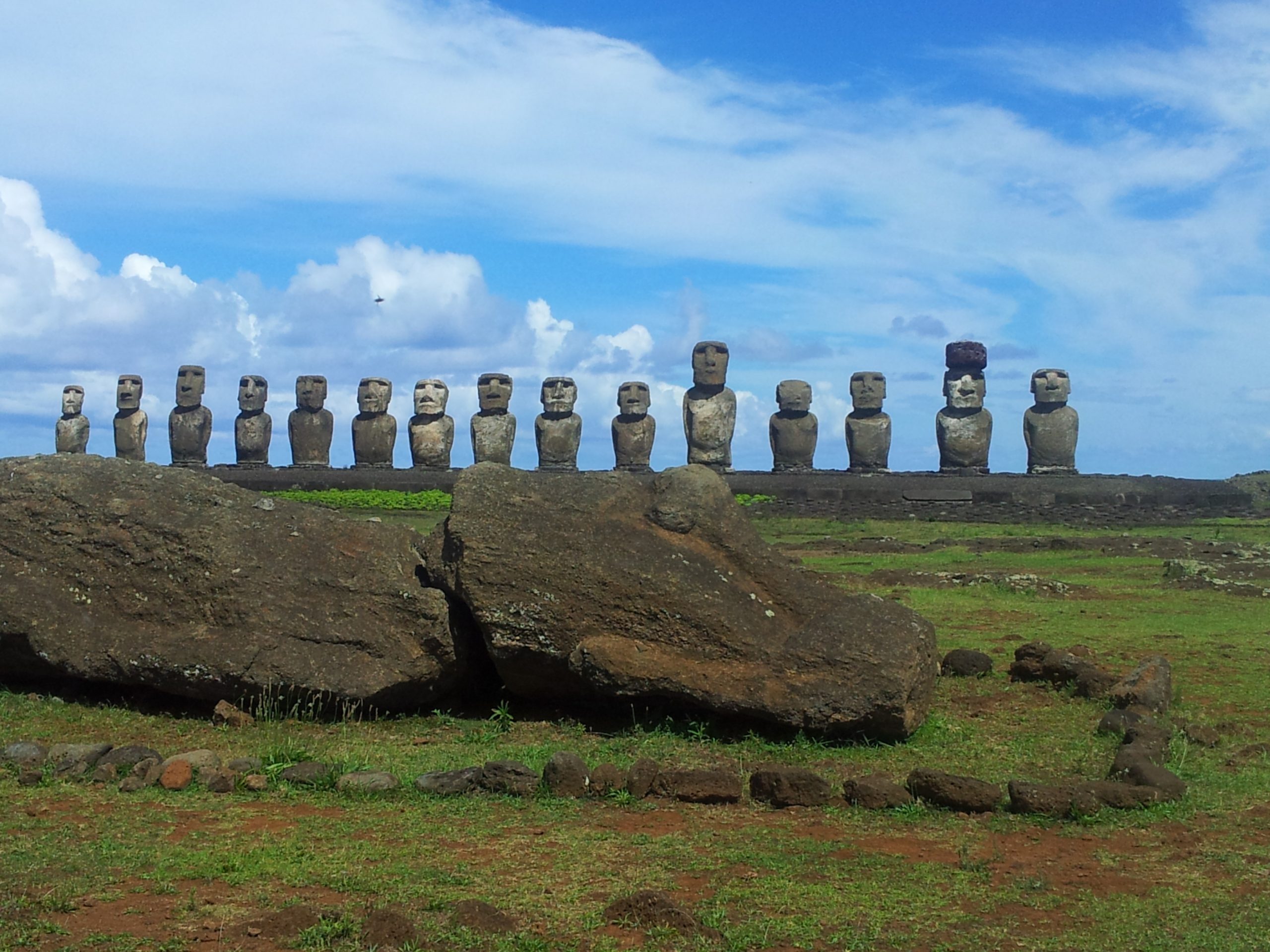
For many years, the moai sculptures on Easter Island have remained as quiet guardians, observing the flow of time and the legacy of the Rapa Nui community. These giant stone creations, hewn from the 13th to the 16th centuries, represent outstanding achievements in craftsmanship as well as emblems of cultural identity, spiritual conviction, and human creativity. Currently, the future of these legendary sculptures is becoming more precarious due to escalating dangers from environmental transformations and human actions.
Located over 2,000 miles off the coast of Chile, Easter Island—known as Rapa Nui by its indigenous inhabitants—has long captured the imagination of archaeologists, historians, and travelers. The moai, carved from volcanic tuff and weighing several tons each, are thought to represent ancestral figures who provided spiritual protection and guidance to the island’s early communities. With their distinctive elongated faces and deep-set eyes, these statues have become a global symbol of mystery and resilience.
However, this endurance is facing unprecedented challenges. Increasing sea levels, shoreline erosion, severe weather conditions, and the continuous wearing away of the stone due to wind and salt are jeopardizing the moai. The advancement of climate change is specifically hastening the breakdown of these historic carvings, with a number of statues already exhibiting noticeable damage. Intense rains, rising humidity, and more frequent tempests have resulted in fissures and disintegration in numerous sculptures, endangering their physical soundness.
The secluded position of the island, which used to act as a barrier against human impact, has turned out to be less resistant due to the rise in tourism and development. A surge in visitors, contamination, and the presence of foreign plant varieties have heightened the fragility of both the statues and the nearby archaeological locations. As the number of tourists coming to see the moai in person grows annually, maintaining the equilibrium between preservation and tourism has become more fragile.
Local authorities, conservation experts, and members of the Rapa Nui community are working together to address these challenges. Preservation efforts include monitoring environmental conditions, reinforcing coastal defenses, and employing new technologies to assess the condition of the statues. In some cases, digital mapping and 3D scanning have been used to create detailed models of the moai, ensuring that even if physical damage occurs, a record of their original state will remain.
Nevertheless, protecting the moai encompasses more than just technical obstacles—it’s also a matter of cultural and ethical significance. To the Rapa Nui, these statues are far more than historical items; they are revered symbols of their forebears and a crucial aspect of their ongoing cultural legacy. Thus, any choices regarding preservation or movement must include thorough discussions with the community to guarantee their perspectives and customs are honored.
The scenario on Easter Island mirrors a worldwide trend in which historic cultural sites are progressively at risk due to the consequences of climate change. From the increasing water levels in Venice to the whitening of Australia’s Great Barrier Reef, the shared legacy of humanity is being altered by environmental influences that are not easily controlled. The moai sculptures, positioned on delicate seaside cliffs, have become symbols of the effort to preserve the past while confronting an unpredictable environmental future.
In addition to these environmental stresses, the island confronts socio-political issues. Recently, the Rapa Nui people have pushed for more self-governance and authority over their traditional territories, such as the stewardship of ancient sites. Disputes have emerged concerning land possession, preservation finances, and the involvement of outside entities in determining actions. These intricate dynamics underscore the importance of thoughtful, inclusive strategies in managing heritage, acknowledging both scientific insights and native rights.
Despite the challenges, there is hope that the moai can endure. International partnerships, government support, and local initiatives have combined to bring attention and resources to the conservation of Easter Island’s heritage. Programs aimed at educating visitors about the cultural significance of the moai and encouraging responsible tourism practices have also gained momentum, emphasizing the importance of preservation over exploitation.
A potential approach involves establishing more rigorous guidelines for visitors and restricting entry to the most sensitive locations. Certain specialists recommend that using virtual reality and digital displays might provide alternative experiences of the moai’s magnificence without worsening their physical condition. In the meantime, ongoing scientific studies are investigating innovative materials and methods that could decelerate stone erosion and preserve these statues for future generations.
The tale of the moai is not just about ancient stone statues; it also represents human perseverance, adaptability, and harmony with the natural world. Those who sculpted and moved these colossal figures long ago achieved it with scarce resources, strong spiritual beliefs, and an extensive understanding of their surroundings. Our modern task is to preserve this heritage, ensuring the moai continue to stand—not only as relics of history but as vibrant icons of cultural sustainability in a swiftly evolving world.
Amid ongoing endeavors to safeguard these renowned statues, the moai of Easter Island serve as a reminder of the fragile equilibrium between human history and natural elements. The question persists as to whether humankind can confront this challenge, conserving one of the world’s most treasured cultural sites before it succumbs to the passage of time, the tides, and disregard.