
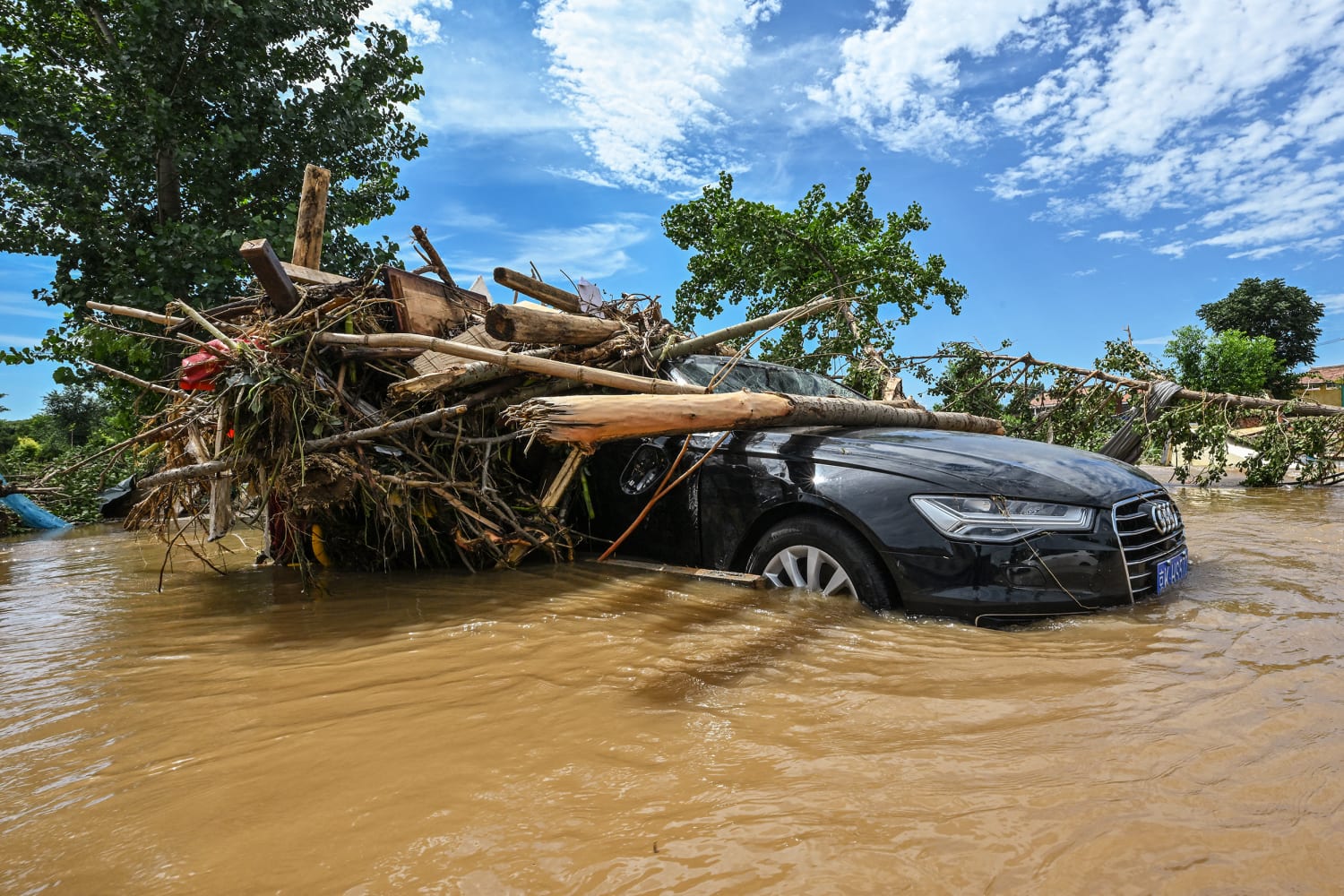
Heavy flooding has caused considerable destruction in and around Beijing, resulting in many fatalities and extensive chaos. As reported by local officials, the severe weather has claimed the lives of at least 38 individuals, with rainfall reaching amounts the area generally experiences over a full year. This catastrophe stands as one of the most severe flooding incidents in recent history for the Chinese capital and the neighboring provinces.
Initiated by a potent weather system that halted over northern China, the heavy rainfall led to rivers bursting their banks, inundation of communities, and crucial infrastructure collapsing under stress. Streets turned into waterways, metro services were suspended, and emergency teams faced challenges in reaching stranded inhabitants as the waters surged rapidly throughout both city and countryside areas.
The extraordinary amount of rain—recorded in certain regions at close to 750 millimeters (30 inches) within several days—has inundated both natural terrains and city drainage systems. Weather experts observed that although summer storms are typical in northern China, the severity and length of this occurrence were far beyond historical averages. Several monitoring locations observed unprecedented rainfall levels, heightening ongoing worries about the rising occurrence of severe weather conditions associated with climate change.
Among the hardest-hit areas were suburban districts in western Beijing and parts of neighboring Hebei Province. Many fatalities occurred when homes collapsed or vehicles were swept away by surging waters. Emergency services deployed thousands of responders, including military personnel, to assist in evacuations, deliver aid, and stabilize weakened infrastructure.
In one particularly tragic incident, a group of first responders attempting to evacuate residents was caught in a sudden surge, resulting in multiple casualties. Their sacrifice has been widely recognized as a testament to the dangers faced by those working on the front lines of disaster response.
Thousands of people have been displaced from their homes and are now residing in temporary shelters. The flooding has also disrupted transportation, suspended industrial operations, and damaged crops, raising concerns about the longer-term economic and humanitarian impact. Local governments have pledged financial assistance to affected families, while national agencies have dispatched additional resources to accelerate recovery efforts.
Beijing’s urban layout, marked by a mix of modern high-rises and older low-lying neighborhoods, posed unique challenges during the floods. Despite recent investments in drainage systems, the city’s infrastructure proved insufficient to handle rainfall of this magnitude. Urban planners have acknowledged the need for more resilient systems capable of managing extreme weather, particularly in light of shifting climate patterns.
Images from satellites taken before and after the storm illustrate significant alterations in the landscape: highways that were once busy are now calm lakes, and farming areas have transformed into marshlands. Specialists in environmental studies caution that the restoration might require months, particularly in low-lying regions susceptible to flooding, where water diminishes at a slow pace.
Simultaneously, health authorities are on the lookout for additional hazards like illnesses transmitted through water, pollution of potable water, and the proliferation of mold in moist structures. Medical personnel have been sent to impacted regions, provided with urgent supplies and mobile medical units.
Este desastre ocurre en medio de los esfuerzos más amplios a nivel nacional para mejorar la preparación de China ante desastres y las estrategias de adaptación al clima. En años recientes, varias provincias han sufrido desastres relacionados con el clima, que van desde inundaciones hasta sequías e incendios forestales. Los expertos están pidiendo una planificación más proactiva, que incluya sistemas de alerta temprana, inversión en diseño urbano sostenible y una mejor coordinación entre los gobiernos municipales y provinciales.
The government has declared a period of mourning for the lives lost and is conducting detailed investigations into how response protocols can be improved. In a statement issued following the disaster, national leaders emphasized the importance of prioritizing public safety and modernizing critical infrastructure.
While the immediate focus remains on search and rescue efforts, attention is also turning to questions about long-term resilience. How can rapidly growing cities like Beijing adapt to increasingly erratic weather? What policies are needed to ensure that new developments are flood-resistant? And how should communities be educated and equipped to handle emergencies?
This flood serves as a stark reminder of nature’s power and the urgent need to adapt urban environments to withstand the unpredictable impacts of climate change. It also underscores the importance of community solidarity and preparedness in times of crisis.
Mientras continúan las operaciones de limpieza y el país empieza a evaluar la magnitud completa del desastre, también están surgiendo relatos de supervivencia y heroísmo. Voluntarios, personal médico, vecinos y extraños se han unido para ofrecer comida, refugio y apoyo, demostrando fortaleza ante la tragedia.
The journey to healing has started, yet for a large number of people, the wounds caused by the flood—both tangible and psychological—will persist. In the upcoming weeks and months, reconstruction initiatives will aim not only at repairing destroyed structures but also at strengthening the systems required to avert events of this magnitude in the future.
In the end, the disastrous flooding in the Beijing area goes beyond a simple weather occurrence; it serves as a wake-up call. As communities grieve, reconstruct, and adjust, the insights gained here could contribute to creating a safer and more resilient future.