

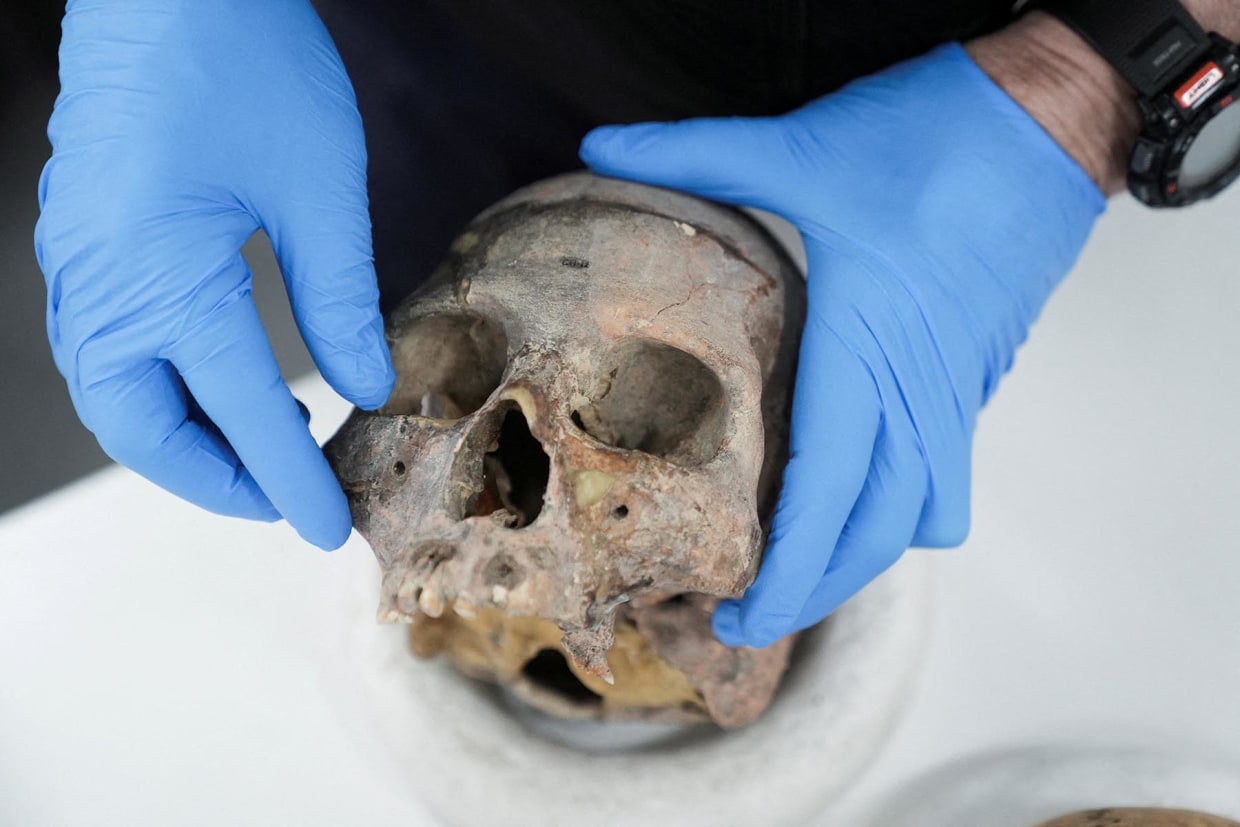
A group of researchers in Colombia has uncovered a finding that might redefine our knowledge of human history in the Americas. Through DNA sequencing from ancient remains discovered in the area, the team has uncovered signs of a previously unidentified human lineage. This discovery introduces a new phase in exploring early inhabitants on the continent and sheds light on the intricacy of human migration and development.
The project focused on remains that date back thousands of years, carefully preserved in archaeological sites that hold key information about the earliest inhabitants of South America. Genetic analysis of these samples revealed markers that do not correspond with any of the lineages currently known to science. This suggests that an entire branch of human ancestry, until now hidden from researchers, played a role in shaping the population history of the region.
For decades, anthropologists and geneticists have sought to trace the origins and movements of the first people who arrived in the Americas. It has long been accepted that early humans migrated across the Bering land bridge from Asia during the last Ice Age, spreading southward over time. However, findings like this challenge the simplicity of that narrative, showing that the genetic heritage of early populations was more diverse and interconnected than previously thought.
Los científicos colombianos, en colaboración con investigadores internacionales, emplearon tecnologías avanzadas de secuenciación de ADN para reconstruir la información genética a partir de muestras fragmentadas. El ADN antiguo, o aDNA, a menudo se encuentra muy degradado, lo que complica su análisis. Sin embargo, gracias a métodos mejorados de extracción y secuenciación, los investigadores ahora pueden recuperar datos valiosos incluso de restos sometidos a condiciones ambientales desafiantes como el calor y la humedad, ambas frecuentes en América Latina.
Based on the scientists’ findings, the newly discovered lineage does not fit well with the primary ancestral groups recognized in the Americas. Rather, it shows a unique genetic pattern, indicating that there might have been several waves of migration or interaction with previously unrecorded populations. This implies that the peopling of the Americas was not a simple, unidirectional event, but rather a multitude of intricate interactions among various groups over thousands of years.
Archaeological discoveries had previously pointed to this intricacy. Various cultural items, settlement configurations, and burial customs in different areas indicate that several communities with distinct traditions lived together and affected each other. The genetic evidence now offers biological backing for these insights, strengthening the notion that the early history of humans in the Americas was characterized by diversity, adaptation, and interaction.
One of the outstanding features of this study is its ability to complete missing parts of historical documentation. There are few written records of pre-Columbian societies in South America, and our understanding largely derives from archaeological findings. DNA analysis offers a novel method to piece together the stories of individuals who did not leave behind written documents, yet whose genetic legacy continues today. In this way, ancient DNA acts as a link between history and the present, linking current populations with their predecessors.
The study also highlights the importance of conducting research within Colombia and across Latin America, regions that have not always received as much attention in global discussions about human origins. By investing in local research and utilizing cutting-edge technology, Colombian scientists are making significant contributions to a field often dominated by studies in North America, Europe, and Asia. This achievement underscores the value of building scientific capacity in diverse regions to generate discoveries of global importance.
The implications of the discovery extend beyond academic research. Understanding the deep genetic history of the Americas has cultural and social importance, particularly for Indigenous communities. Many groups today are interested in tracing their ancestral roots and preserving their heritage. While genetic research must be conducted with sensitivity and respect, it can provide new perspectives on identity and continuity across generations.
At the same time, the findings raise important ethical considerations. Working with ancient remains involves careful collaboration with local communities and respect for cultural traditions surrounding the treatment of ancestral remains. The Colombian team has emphasized the importance of ethical research practices, ensuring that scientific advancement goes hand in hand with cultural sensitivity.
As the field of ancient DNA research grows, more discoveries like this are expected to emerge. Each new finding adds detail to the mosaic of human history, showing that our past is far more intricate than previously imagined. For South America in particular, where vast landscapes remain unexplored and countless archaeological sites await investigation, the potential for groundbreaking discoveries is immense.
Scientists believe that this new lineage could help explain genetic variations observed in modern populations that do not fully match known ancestral profiles. By studying these connections, researchers hope to better understand how ancient migrations shaped today’s genetic diversity across the continent. Future studies may even reveal interactions between this unknown lineage and other populations, offering clues about cultural exchanges, survival strategies, and adaptation to changing environments.
The finding also showcases the influence of technological advancements in scientific research. Ten years ago, analyzing severely degraded DNA in tropical environments would have been almost unachievable. Nowadays, improvements in genome examination enable researchers to uncover secrets that were unreachable for ages. As methods keep evolving, more data will probably surface from specimens that were once thought inappropriate for examination.
At present, recognizing this unfamiliar human lineage marks a significant achievement for Colombian science and the global exploration of human origins. It enriches our comprehension of ancient history and questions the straightforwardness of migration paths into the Americas. In the end, the study reveals that human history is not linear but rather a intricate network of links, interactions, and adaptations that have formed the world as we know it.
The group responsible for this research has indicated intentions to broaden their investigation by examining more remains from various parts of Colombia and other regions. These studies have the potential to determine if this lineage was common throughout South America or restricted to certain locales. Moreover, they could shed light on the duration of this group’s existence and if it made enduring contributions to present-day genetic variation.
By continuing to explore these questions, scientists hope to move closer to a comprehensive picture of the first peoples of the Americas. Each fragment of DNA recovered from ancient remains adds a new piece to the puzzle, offering a glimpse into the lives of those who walked these lands long before written history began.
The Colombian discovery is not just about science. It is a reminder of the resilience of human memory, carried silently in our genes across generations. The revelation of an unknown lineage hidden in the DNA of ancient remains shows that the story of humanity is still unfolding, with many chapters yet to be written.