

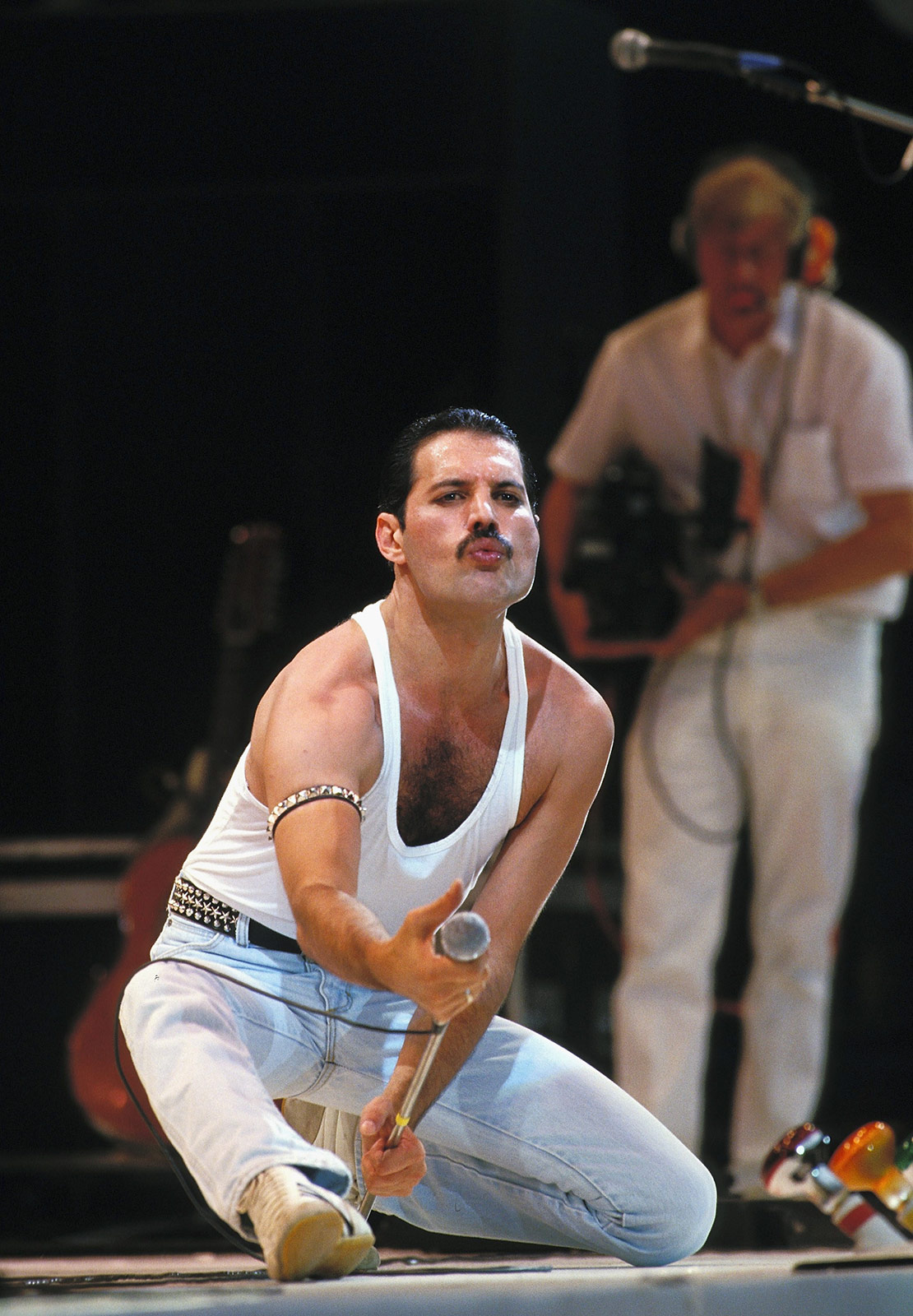
Who Was Freddie Mercury?
Freddie Mercury is still regarded as one of the most legendary personas in music history. Known originally as Farrokh Bulsara, he was born on September 5, 1946, in Stone Town, Zanzibar. Freddie would later influence a generation of rock music through his dramatic shows and unmatched singing talent. As the main singer of the renowned group Queen, he emerged as an emblem of creative brilliance and cultural rebellion.
Early Life and Transformation into Freddie Mercury
Freddie Mercury’s journey began in Zanzibar, where his Parsi parents, Bomi and Jer Bulsara, raised him along with his sister. As a young boy, he showed a keen interest in music and formed his first band, The Hectics, during his time at St. Peter’s School in Panchgani, India. It was here that his classmates started to call him “Freddie.”
In 1964, the Bulsara family fled to England due to unrest in Zanzibar. Settling in Feltham, Middlesex, Freddie enrolled at Isleworth Polytechnic (now West Thames College) and later attended Ealing Art College, where he earned a diploma in art and graphic design. This shift was pivotal, not only for his future in the music industry but also in shaping his unique sense of style and presentation.
The Creation and Ascendancy of Queen
In 1970, Freddie teamed up with guitarist Brian May, drummer Roger Taylor, and bassist John Deacon to create Queen. Although they faced challenges at first, their 1973 debut album titled “Queen” set the stage for later achievements. The band only started gaining considerable attention with the release of “Queen II” and the albums that followed.
Freddie’s transformation into a stage icon was marked by his dynamic persona, powerful voice, and flamboyant fashion sense. He was instrumental in the creation of the band’s most celebrated works. The 1975 album “A Night at the Opera,” featuring the epic “Bohemian Rhapsody,” is often cited as a masterpiece, blending opera with rock in a way that had never been done before. The song’s innovative music video is frequently credited with pioneering the promotional video era in the music industry.
Artistic and Personal Defiance
Freddie Mercury was famous for his three-octave vocal ability and his skill in transitioning smoothly across various musical styles and genres. His stage shows were characterized by dramatic movements and strong audience interaction, qualities that distinguished him from other artists of his time. Tracks such as “We Are the Champions,” “Somebody to Love,” and “Don’t Stop Me Now” still have a lasting impact, each highlighting his profound lyrics and versatile singing ability.
Beyond his music, Freddie’s lifestyle often captured public attention. His sexuality became a topic of intrigue and speculation, yet he remained unapologetically bold about his personal life. While he kept much private, his occasional statements and flamboyant stage presence served as a profound assertion of his identity.
Legacy and Influence
Freddie Mercury’s premature passing on November 24, 1991, caused by AIDS-related complications, signified the conclusion of an era. Nonetheless, his legacy persists. He has inspired numerous musicians across diverse genres. Events like the 1992 Freddie Mercury Tribute Concert for AIDS Awareness demonstrate the enduring influence of his music and advocacy.
Freddie’s life and work continue to be celebrated through biographical films such as “Bohemian Rhapsody” and ongoing music sales. Queen continues to captivate new generations, with Freddie Mercury being immortalized as a figure of artistic courage and brilliance.
His talent for engaging audiences with genuine emotion and daring creativity makes Freddie Mercury an enduring icon. As a pioneer in music and a cultural symbol, he boldly questioned conventions and celebrated uniqueness, crafting a legacy that surpasses music and still motivates people.
Reflecting on Freddie Mercury’s unmatched influence uncovers the soul of an artist who not only excelled in his craft but also transformed the realm of music history. His narrative exemplifies the strength of sincerity, innovation, and the unyielding quest for passion.