
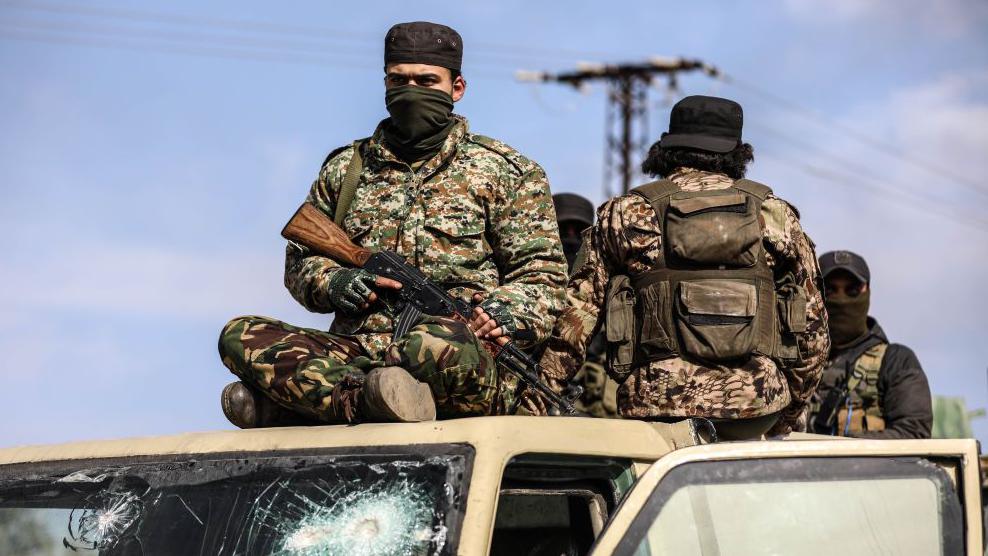
Following the rapid overthrow of Bashar al-Assad’s regime by Islamist rebels, Syria continues to face significant instability. The interim administration, under the leadership of Ahmad al-Sharaa, is struggling with increasing security issues, such as fierce resistance from Assad’s remaining supporters. Although the fall of Assad’s repressive regime was a pivotal moment in Syria’s 13-year conflict, achieving lasting peace remains a complex challenge.
The interim government, primarily made up of individuals who gained influence from opposition areas such as Idlib in the northwest, has taken over a nation left divided and ravaged by prolonged conflict. The elimination of Assad-era institutions, including the military and the Baath Party, has led to the displacement of countless former regime members and supporters. A significant number of these individuals have declined to accept the new government’s authority, contributing to instability that jeopardizes the delicate administration.
A persistent menace from supporters of Assad
Following Assad’s exit, his supporters have become a formidable insurgent group. These remains of the old regime, with deep roots in Syria’s military, intelligence, and political frameworks, have used their established networks to mount armed opposition. This rebellion is especially pronounced in the coastal regions of Latakia and Tartous, traditional bastions of the Assad lineage and the heartland of Syria’s Alawite community.
In the months since Assad’s departure, his loyalists have emerged as a significant insurgent force. These remnants of the former regime, many of whom were deeply embedded in Syria’s military, intelligence, and political systems, have leveraged their pre-existing networks to organize armed resistance. This insurgency has been particularly active in the coastal provinces of Latakia and Tartous, long-standing strongholds of the Assad family and home to much of Syria’s Alawite minority.
The Syrian Observatory for Human Rights recently reported a deadly ambush in Latakia province, where gunmen targeted government forces attempting to apprehend a former Assad official. The attack left at least 13 security personnel dead and set off a wave of violence across the region. By the following day, clashes had escalated, resulting in over 120 deaths—a stark reminder of the challenges facing the interim government.
Escalating Strains in Alawite Areas
Rising tensions in Alawite regions
The insurgent activity in Latakia and Tartous has further strained relations between Syria’s Sunni-led transitional government and the Alawite minority, a Shia offshoot that formed the backbone of Assad’s regime. The Alawites, who enjoyed privileges and power under the Assad government, have faced significant losses in the aftermath of its collapse. Many now feel marginalized and targeted, despite Sharaa’s assurances that his administration will respect Syria’s diverse religious communities.
The scenario in Syria’s southern region continues to be unstable. Despite an agreement struck with Druze forces earlier this week to reduce hostilities, the government still encounters opposition from multiple factions nationwide. Given that various areas are governed by rival groups supported by external powers, the interim government’s influence is both restricted and divided.
The situation in Syria’s south also remains precarious. While a deal was reached with Druze forces earlier this week to ease tensions, the government continues to face resistance from various factions across the country. With different regions controlled by competing groups backed by foreign powers, the interim administration’s authority is limited and fragmented.
The economic and diplomatic challenges ahead
Nevertheless, Western countries remain cautious about Sharaa’s motives, with some doubting that the new government can genuinely abandon the repressive methods of the Assad period. This skepticism has hindered attempts to gain international backing, placing Syria’s economy in a vulnerable state. The interim administration’s capacity to rejuvenate the nation will hinge on its effectiveness in tackling both domestic security issues and foreign diplomatic obstacles.
However, Western nations remain wary of Sharaa’s intentions, with some questioning whether the new government can truly break from the oppressive practices of the Assad era. This skepticism has slowed efforts to secure international support, leaving Syria’s economy in a precarious position. The interim government’s ability to revitalize the country will depend on its success in addressing both internal security concerns and external diplomatic challenges.
Even after Assad’s downfall, Syria is still a mosaic of rival factions and foreign influences. The transitional administration’s authority is far from comprehensive, as various groups dominate different regions of the nation. These factions, frequently supported by external powers with conflicting agendas, contribute an additional layer of intricacy to Syria’s delicate political environment.
For Sharaa, the challenge of bringing the nation together involves winning the people’s trust as much as it does defeating the insurgent menace. His administration has urged ex-members of Assad’s security apparatus to lay down their arms and embrace reconciliation, yet advancement has been gradual. “We are monitoring everyone, but we aim to avoid giving the impression of a witch hunt,” stated a senior official in the interim government. This careful strategy illustrates the fragile equilibrium the new leadership must maintain as it seeks to re-establish order without isolating important parts of the populace.
For Sharaa, the task of unifying the country is as much about earning the trust of its people as it is about overcoming the insurgent threat. His administration has called on former members of Assad’s security forces to surrender their weapons and accept reconciliation, but progress has been slow. “We are keeping an eye on everyone, but we don’t want to create the impression that we are hunting them down,” said a high-ranking official in the transitional government. This cautious approach reflects the delicate balance the new leadership must strike as it attempts to restore order without alienating key segments of the population.
The road ahead
The fall of Bashar al-Assad marked a significant turning point in Syria’s history, but the country’s transition to peace and stability remains fraught with challenges. From the insurgent threat posed by Assad loyalists to the deep divisions among Syria’s religious and ethnic communities, the road ahead is uncertain. The interim government must navigate these obstacles while addressing the pressing needs of a population devastated by more than a decade of war.
At the same time, Syria’s leaders face mounting international scrutiny as they seek to lift sanctions and secure the support needed to rebuild the country. For the transitional government, success will depend on its ability to address the root causes of unrest, foster inclusivity, and demonstrate a genuine commitment to breaking from the authoritarian practices of the past.
As clashes continue and tensions rise, Syria’s future hangs in the balance. The coming months will be critical for Sharaa’s government as it works to consolidate power, restore security, and lay the foundation for a more stable and prosperous nation.